
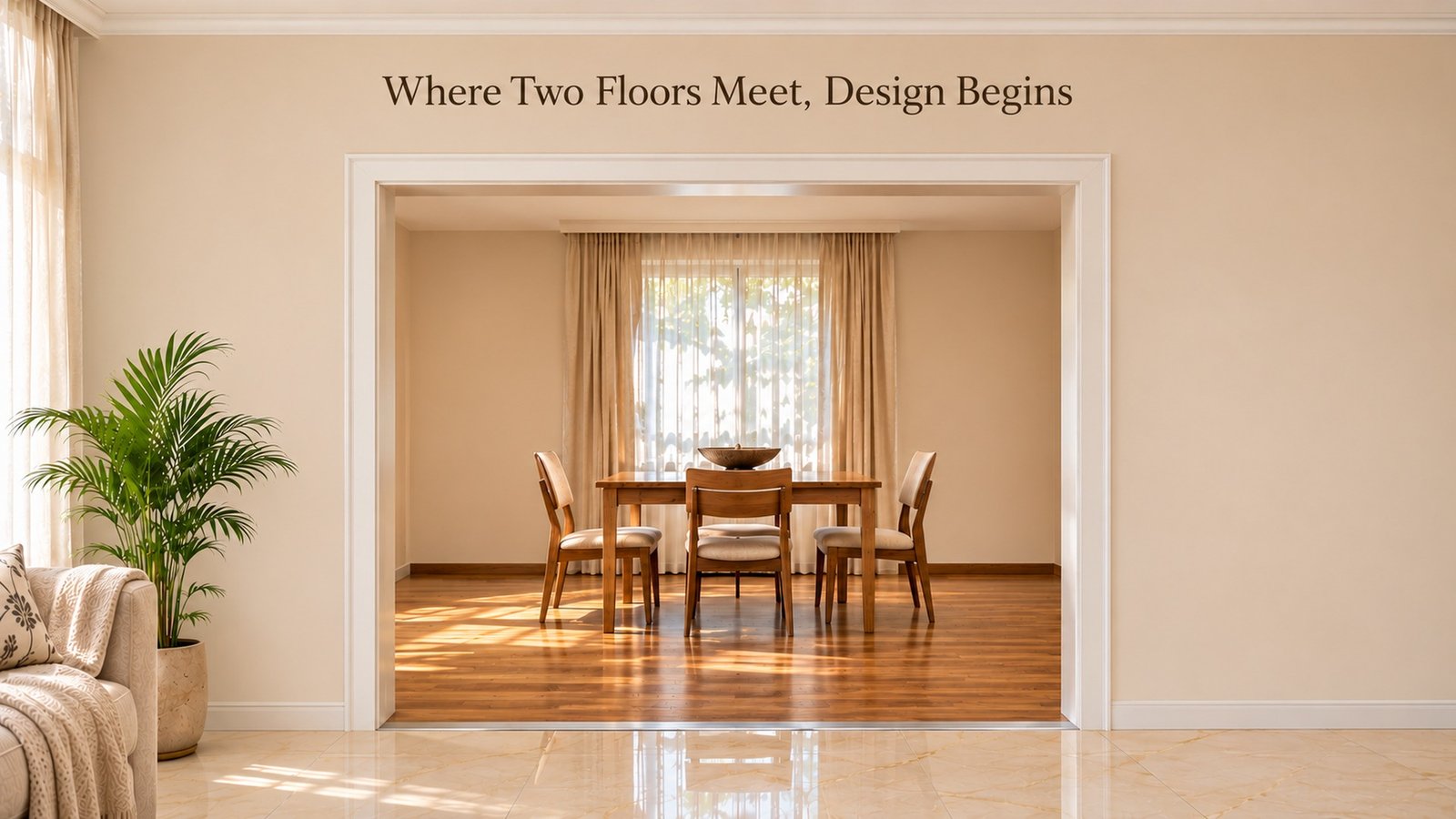
A beautifully designed interior is not defined by individual materials alone. It is also about how those materials connect. In modern homes, where open layouts bring kitchens, living rooms, dining areas, and hallways together, the transition between different flooring materials plays an important role in creating a cohesive appearance.
Imagine a living room with elegant porcelain flooring that connects to a warm wooden-finish floor in the adjoining space. When the materials meet thoughtfully, the result feels intentional and visually balanced. When the transition is poorly planned, even beautiful flooring can look disconnected.
Flooring transitions are therefore more than finishing details. They help define spaces, connect different materials, and contribute to the overall design of an interior.
For homeowners, architects, and interior designers, understanding how to combine flooring materials can make a significant difference. With its diverse range of porcelain and vitrified tiles, Flavour Granito offers design possibilities for creating interiors where different surfaces work beautifully together.
A flooring transition is the point where two different flooring materials, finishes, or surfaces meet. It may connect porcelain tiles with hardwood, carpet with tile, or two different tile designs within the same property.
These transitions serve both visual and practical purposes. They help create a finished edge, accommodate differences in material thickness, and provide a planned connection between adjoining areas.
In contemporary interiors, transitions can also help distinguish functional zones without relying on walls or partitions. This is especially useful in open-plan homes, where the living, dining, and kitchen areas often share one continuous layout.
One of the most popular flooring combinations in modern interiors is porcelain or vitrified tile paired with wood flooring.
Wood introduces warmth and natural character, while porcelain tiles offer a different aesthetic through stone-inspired, marble-look, and contemporary designs. Together, they can create an interesting balance between different interior styles.
For example, marble-look porcelain tiles in a living area can transition into wooden flooring in an adjoining bedroom or study. Alternatively, wood-look tiles can connect visually with natural hardwood in another part of the home.
The key is to coordinate the tones. Warm beige and brown shades can complement natural wood, while cooler gray and white surfaces can create a more contemporary contrast.
Flavour Granito's wooden tile collection offers an additional design possibility for spaces where homeowners appreciate the appearance of wood alongside the practical characteristics associated with tile surfaces.
Open-plan kitchens and living rooms are increasingly common in contemporary residential design. Although these spaces share an overall layout, their flooring requirements may differ.
A kitchen floor may need to accommodate frequent cleaning and everyday spills, while the adjoining living area may be designed around a particular interior aesthetic.
Using different flooring materials can help visually distinguish these spaces without interrupting the open layout.
Consider porcelain or vitrified tiles in the kitchen, transitioning into another flooring material in the living area. The transition can follow the kitchen island, cabinetry line, or architectural boundary to create a deliberate visual separation.
For a more coordinated appearance, select tile colors that complement the living room flooring, furniture, and cabinetry. This creates a natural connection between the two areas while allowing each space to retain its own identity.
Carpet and tile serve different design purposes, making their combination useful in bedrooms, family rooms, and selected residential spaces.
Tiles can establish a clean, structured surface in adjoining areas, while carpet introduces softness and warmth in spaces designed for relaxation.
However, the difference in thickness between these materials needs careful planning. A sudden height difference can create an uncomfortable edge or a potential tripping hazard.
Appropriate transition profiles and installation details help create a more gradual connection. The finished edge should also be compatible with the carpet backing, tile thickness, and expected foot traffic.
For designers, color coordination offers another opportunity. Neutral porcelain tiles can work well alongside textured carpets in beige, cream, gray, or earthy shades.
Not every flooring transition requires two completely different materials. Sometimes, combining different tile designs can create the desired distinction between spaces.
For example, a home may use a subtle natural-look tile throughout the main living area and introduce a more expressive tile design in an adjoining zone. The transition can establish a change in function while maintaining a coordinated interior palette.
Some design combinations worth considering include:
Flavour Granito's range of natural, wooden, marble-inspired, and contemporary tile designs provides inspiration for creating these combinations.
A seamless flooring transition is not only about appearance. The technical details beneath the finished surface are equally important.
Different flooring materials can have different thicknesses, installation requirements, and underlayments. For instance, the final height of a tiled floor may differ from that of hardwood, laminate, or carpet.
Before installation, professionals should consider:
Planning these details before installation helps avoid unexpected height differences, uneven edges, and poorly finished connections.
For large-format porcelain and vitrified tiles, substrate preparation and installation accuracy are particularly important. A suitable substrate, compatible adhesive, and appropriate installation method should be selected according to the tile specifications and project conditions.
Transition profiles are finishing components used where two flooring materials meet. They can protect exposed edges, create a finished connection, and accommodate certain differences in floor height.
The appropriate profile depends on the materials being joined and the installation conditions.
Common options include:
Metallic finishes, such as brushed aluminum or stainless-steel effects, can complement contemporary interiors. Profiles should be selected based on compatibility, durability, and the specific flooring application.
A well-chosen transition profile should support the overall design rather than distract from it.
Creating a seamless interior does not mean using the same material everywhere. It means selecting surfaces that complement one another in color, texture, scale, and overall appearance.
Flavour Granito offers a diverse range of vitrified, porcelain, and ceramic tiles for different residential and commercial design requirements.
Its collection includes:
These options allow architects, interior designers, and homeowners to explore combinations that connect different areas while maintaining a consistent design direction.
Explore the Flavour Granito tile collection to discover designs for your next residential or commercial project.
The beauty of a well-designed interior lies in the details, including the way one flooring material meets another. From tile-to-wood combinations and kitchen-to-living room transitions to carefully coordinated tile patterns, thoughtful planning can make different spaces feel connected without making them look identical.
Choosing complementary colors, considering floor heights, selecting suitable transition profiles, and following professional installation practices all contribute to a more refined result.
At Flavour Granito, we bring together a variety of tile designs, sizes, and finishes to support creative flooring concepts for modern spaces. Whether you are designing a warm residential interior or a contemporary commercial environment, the right combination of surfaces can help bring the entire design together.
Discover more possibilities with Flavour Granito and explore tiles that complement the way modern spaces are designed.
23-11-2026
What started 25 years ago in Morbi, India’s ceramic hub, has grown into a trusted global brand. At Flavour Granito, we’ve built our legacy on creating tiles that blend artistry.
Quick Links
Available Sizes
Flavour Granito © . All rights reserved | Design and Managing By Roex Design