
There was a time when the dream home looked almost untouched.
Every surface matched. Every finish coordinated. The palette stayed safely neutral. Furniture looked as though it had arrived together, and nothing seemed out of place.
But in 2026, something is changing.
American homeowners are becoming less interested in homes that look perfectly styled and more interested in homes that feel personal, collected, comfortable, and lived in.
The shift is not about abandoning beautiful design. It is about redefining what beautiful design means.
According to Houzz’s 2026 U.S. Fall Design Trends Report, homeowners and designers are moving toward warmer palettes, layered interiors, natural materials, texture, and spaces that reflect personality rather than simply following a polished formula. The report also found that 61% of homeowners expect to stay in their homes for 11 years or more after renovating, while 44% describe their home as a “forever home.”
That changes the way people think about every design decision, from the furniture they collect to the surfaces they live with every day.
For years, coordinated interiors dominated residential design.
White kitchens. Gray flooring. Matching cabinetry. Uniform finishes. Carefully selected accessories.
The result was undeniably clean, but sometimes it also felt interchangeable.
Today, homeowners are increasingly looking for something that cannot be easily replicated: character.
A vintage chair beside a contemporary sofa. Artwork collected from different places. Natural wood alongside stone-inspired surfaces. A handcrafted-looking wall finish paired with clean architectural lines.
The goal is no longer for everything to look like it came from the same showroom.
Instead, contrast creates interest.
The home begins to feel as though it has evolved naturally rather than being completed in a single afternoon.
This “collected-over-time” approach is one of the defining directions emerging in 2026 interiors, with designers embracing a mixture of old and new, personal objects, natural materials, and visible texture.
There is an important distinction between a character-rich home and a cluttered one.
Character comes from intention.
It can be a sculptural light fixture, an antique mirror, a piece of artwork with a story, a richly textured wall, or a floor whose subtle variation prevents a room from feeling flat.
The strongest interiors still have structure.
They simply allow more room for individuality.
This is why the movement toward character is not the opposite of modern design. In many ways, it is becoming the next evolution of it.
Clean architectural lines can coexist with warm materials. Contemporary furniture can sit comfortably beside vintage pieces. Minimal cabinetry can become more expressive when paired with a tactile backsplash or a naturally inspired floor.
The result is modern without feeling manufactured.
One of the most interesting parts of this shift is the growing appreciation for materials that show variation.
Perfectly uniform surfaces can create visual calm, but natural-looking materials introduce something different: depth.
Subtle movement. Variation in tone. Stone-inspired veining. Wood-inspired grain. Matte textures. Soft imperfections.
These details give surfaces a sense of individuality.
Current design reporting shows growing interest in materials such as natural stone, artisan plaster, aged metals, and other finishes with visual history and tactile qualities. At the same time, tile design is becoming increasingly focused on surfaces that invite touch, including embossed, undulating, and dimensional finishes.
For homeowners, this means the surface beneath their feet or across a wall is no longer simply a background element.
It becomes part of the personality of the room.
When people hear “character,” they often think about furniture, artwork, lighting, or décor.
But surfaces can establish character long before those elements are added.
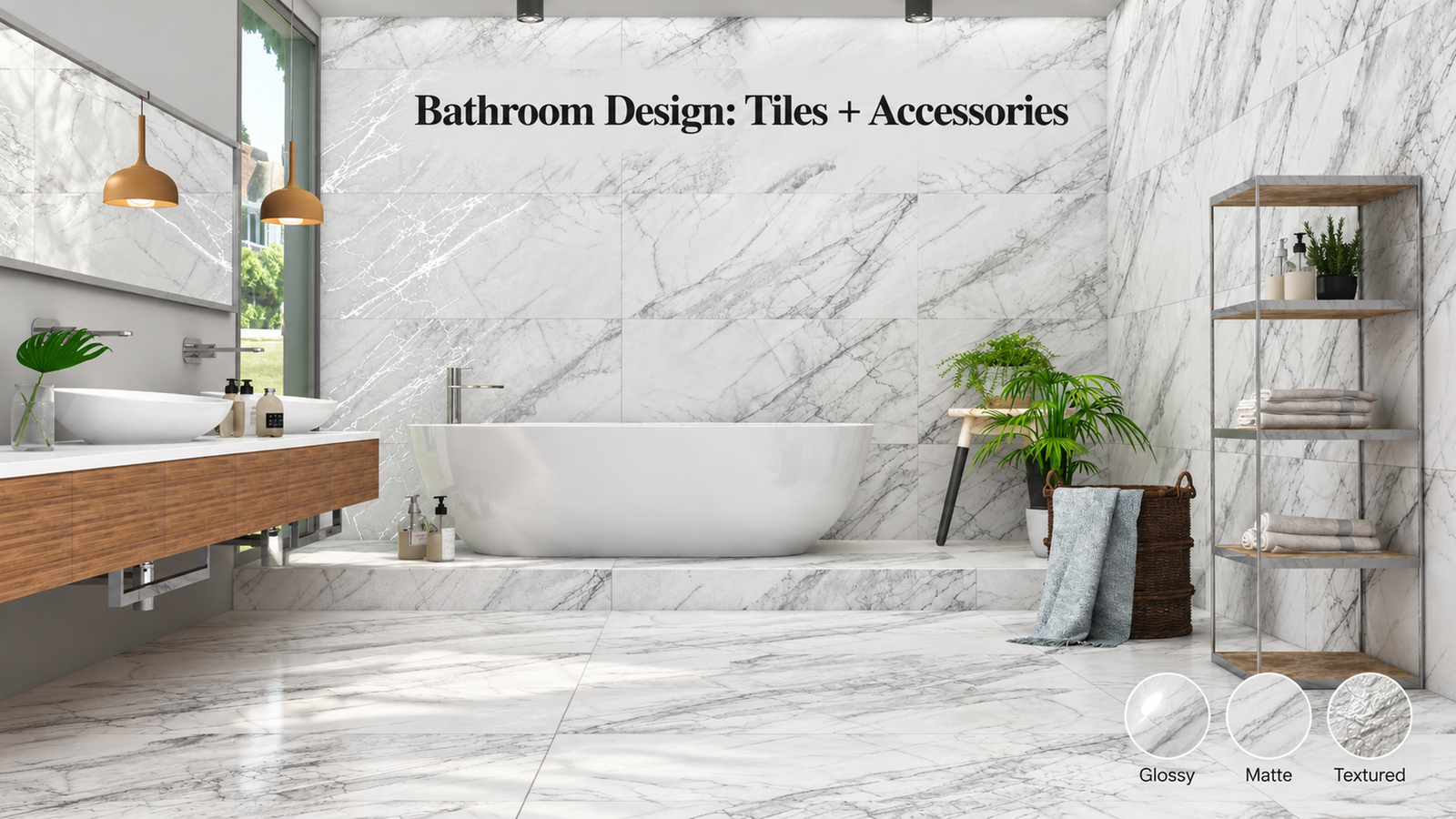
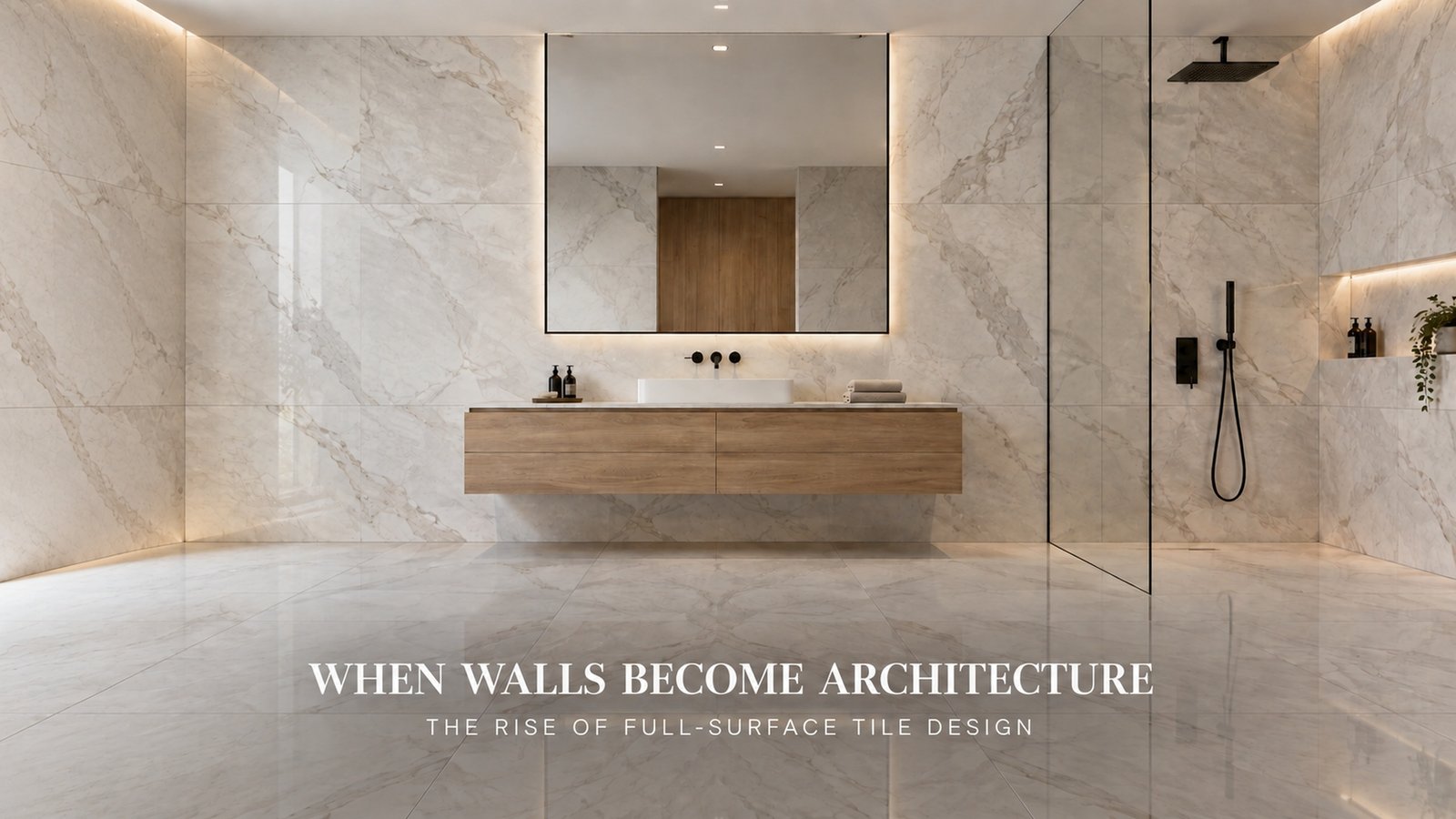
A floor can make a room feel warm and grounded. A marble-inspired wall can introduce movement and sophistication. A wood-look porcelain tile can bring organic warmth without sacrificing practicality. A textured ceramic surface can add dimension to an otherwise restrained space.
This is where modern tile design becomes particularly interesting.
Today's porcelain and vitrified tiles can reinterpret the visual language of natural stone, wood, concrete, and other materials while offering the durability and everyday practicality expected from a contemporary surface.
For homeowners creating spaces they intend to live in for many years, that combination matters.
The objective isn't simply to choose a beautiful tile.
It is to choose a surface that can become part of the home's story.
Another noticeable change is the movement away from interiors dominated by cool whites and grays.
Warmer neutrals, earthy tones, brown wood shades, muted greens, and creamy whites are creating spaces that feel more grounded and inviting.
This does not mean neutral interiors are disappearing.
Instead, neutrals are becoming more nuanced.
A warm beige with stone-like movement feels very different from a flat beige. A soft ivory porcelain tile can create a sense of spaciousness while subtle variation keeps the surface from feeling sterile. A warm wood-look floor can soften a contemporary kitchen without making it feel rustic.
The difference is often not the color itself.
It is the depth within the color.
Perhaps the biggest reason behind this shift is surprisingly practical.
People are thinking about how they actually want to live.
When 61% of renovating homeowners expect to remain in their homes for at least 11 years, design decisions naturally become less about what looks impressive today and more about what will continue to feel right years from now.
That encourages homeowners to move beyond short-lived trends.
Instead of asking:
“What is everyone choosing right now?”
The better question becomes:
“What will still feel like us five or ten years from now?”
That mindset favors timeless materials, adaptable layouts, durable flooring, versatile colors, and surfaces that can work with changing furniture and décor.
It also explains why character matters so much.
Trendy design can be replicated.
Personal design cannot.
A truly successful interior does not need to be finished forever on move-in day.
It should have room to evolve.
A beautiful porcelain floor can remain while furniture changes around it. A sophisticated tile backsplash can support different cabinet colors over the years. A neutral stone-inspired surface can accommodate bold artwork today and a completely different design direction later.
This is where thoughtful material selection becomes important.
The foundation should be strong enough to support change without demanding it.
Flavour Granito's range of ceramic, porcelain, GVT, and PGVT surfaces reflects this broader approach to modern interiors, offering everything from natural and wood-inspired looks to matt, glossy, carving, and other expressive finishes. Available in multiple large and contemporary formats, these surfaces can help establish a visual foundation that works across different residential styles.
Because character does not necessarily come from choosing the loudest material.
Sometimes it comes from choosing the right material and allowing everything around it to become personal.
Luxury interiors are changing in a subtle but meaningful way.
Luxury is no longer only about pristine finishes, oversized spaces, or perfectly coordinated furniture.
Increasingly, it is about belonging.
A room feels luxurious when it feels considered. When materials feel good beneath your feet. When light interacts with texture. When furniture has meaning. When the space reflects the people living inside it rather than a catalogue.
That is why character is becoming more valuable than perfection.
Perfection can make a home look finished.
Character makes it feel lived in.
The most interesting homes of 2026 may not be the ones that follow every trend.
They may be the ones that know which trends to ignore.
American homeowners are increasingly creating interiors around longevity, personality, warmth, and material depth. The growing preference for collected spaces, natural variation, tactile surfaces, and long-term livability suggests a broader change in how people think about their homes.
The future of residential design is not about making every home look different for the sake of being different.
It is about making every home feel distinctly yours.
And sometimes, the most beautiful space is not the one without imperfections.
It is the one with enough character to tell a story.
12-10-2026
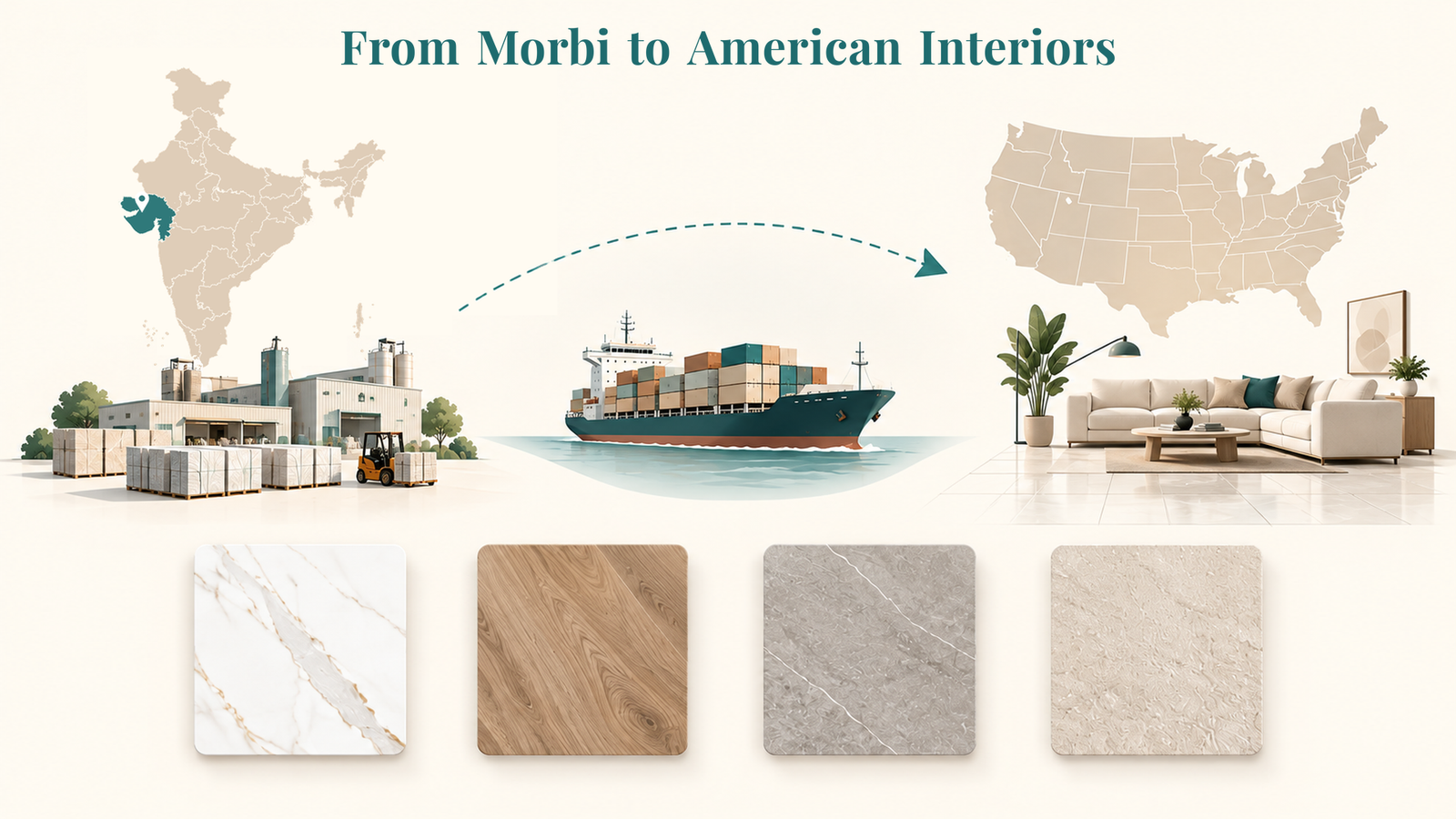
What started 25 years ago in Morbi, India’s ceramic hub, has grown into a trusted global brand. At Flavour Granito, we’ve built our legacy on creating tiles that blend artistry.
Quick Links
Available Sizes
Flavour Granito © . All rights reserved | Design and Managing By Roex Design