A beautiful surface should work in a small apartment.
It should work in a sprawling luxury home.
It should feel equally considered across a boutique hotel, a modern restaurant, or a commercial environment.
That sounds simple.
It isn't.
As architecture becomes more flexible, the materials used within it need to become more adaptable too.
Open-plan homes are changing the relationship between kitchens, dining areas, and living rooms. Mixed-use spaces are becoming more common. Commercial interiors are being redesigned around changing functions. Even homeowners are thinking beyond today's floor plan and asking how their spaces might evolve five, ten, or fifteen years from now.
This is where scalable surface design enters the conversation.
Instead of treating tiles and architectural surfaces as isolated finishes for individual rooms, designers are increasingly looking at them as systems materials that can maintain a consistent design language across different scales, layouts, and applications.
And that shift is changing the way modern spaces are designed.
The word scalable can sound like something from a technology or business meeting.
In interior design, however, the idea is surprisingly straightforward.
A scalable surface is one that can maintain its visual identity and design quality as the application changes.
Think about a residential project with:
The spaces are different in size and function, but they belong to the same home.
A surface system that works beautifully across these environments gives designers greater freedom to create continuity without making every room look identical.
That's the real value of scalability.
The traditional idea of a home divided into clearly defined rooms is changing.
Today's architecture often includes spaces that serve multiple purposes.
A kitchen becomes a social area.
A living room becomes a workspace.
A hallway becomes an architectural feature.
An outdoor terrace becomes an extension of the interior.
This flexibility has created a new challenge for designers.
Materials need to adapt to spaces rather than forcing spaces to adapt to materials.
A surface that can work across different applications makes the design process much more fluid.
Instead of searching for a completely different material every time the function changes, designers can build an entire environment around a coherent surface language.
Modularity is essentially about creating a system from individual components.
In tile design, that concept can have a powerful visual effect.
Individual pieces come together to form larger compositions.
The same surface can create a quiet backdrop in one room and a dramatic architectural statement in another simply because of how it is scaled, arranged, or combined.
This gives architects something extremely valuable:
A designer doesn't have to think of a tile as one fixed visual.
They can think about what happens when that surface is repeated, extended, rotated, combined, or introduced into a different part of the architecture.
The material becomes part of the design system.
The growing popularity of large-format tiles is closely connected to this shift.
Large surfaces reduce visual interruption and create a stronger sense of continuity.
In expansive interiors, they can emphasize scale.
In smaller rooms, they can reduce the number of visible grout lines and create a cleaner visual field.
The same design language can therefore work across dramatically different spaces.
This is particularly valuable in contemporary architecture, where visual continuity is often more important than rigid room-by-room separation.
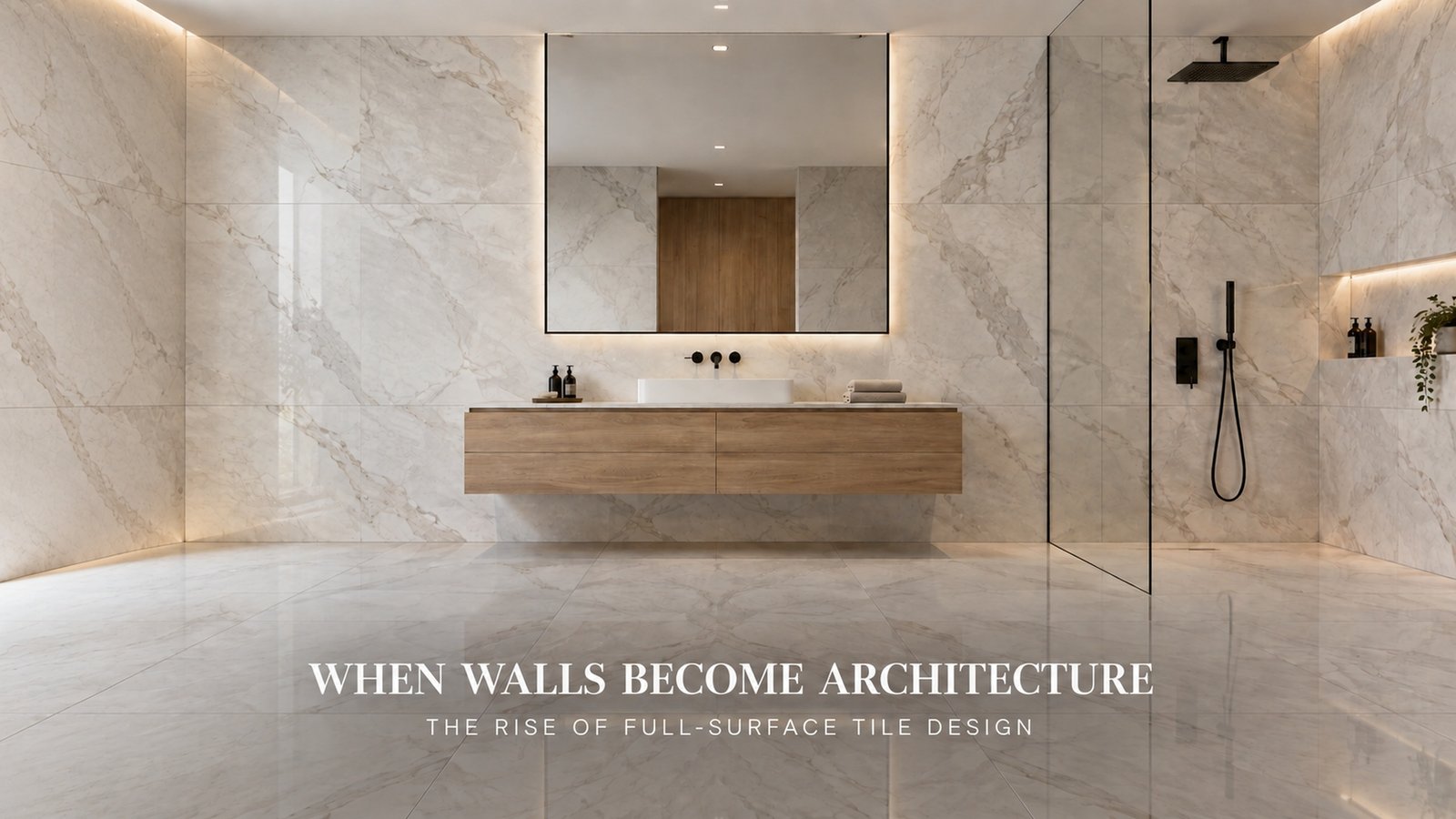
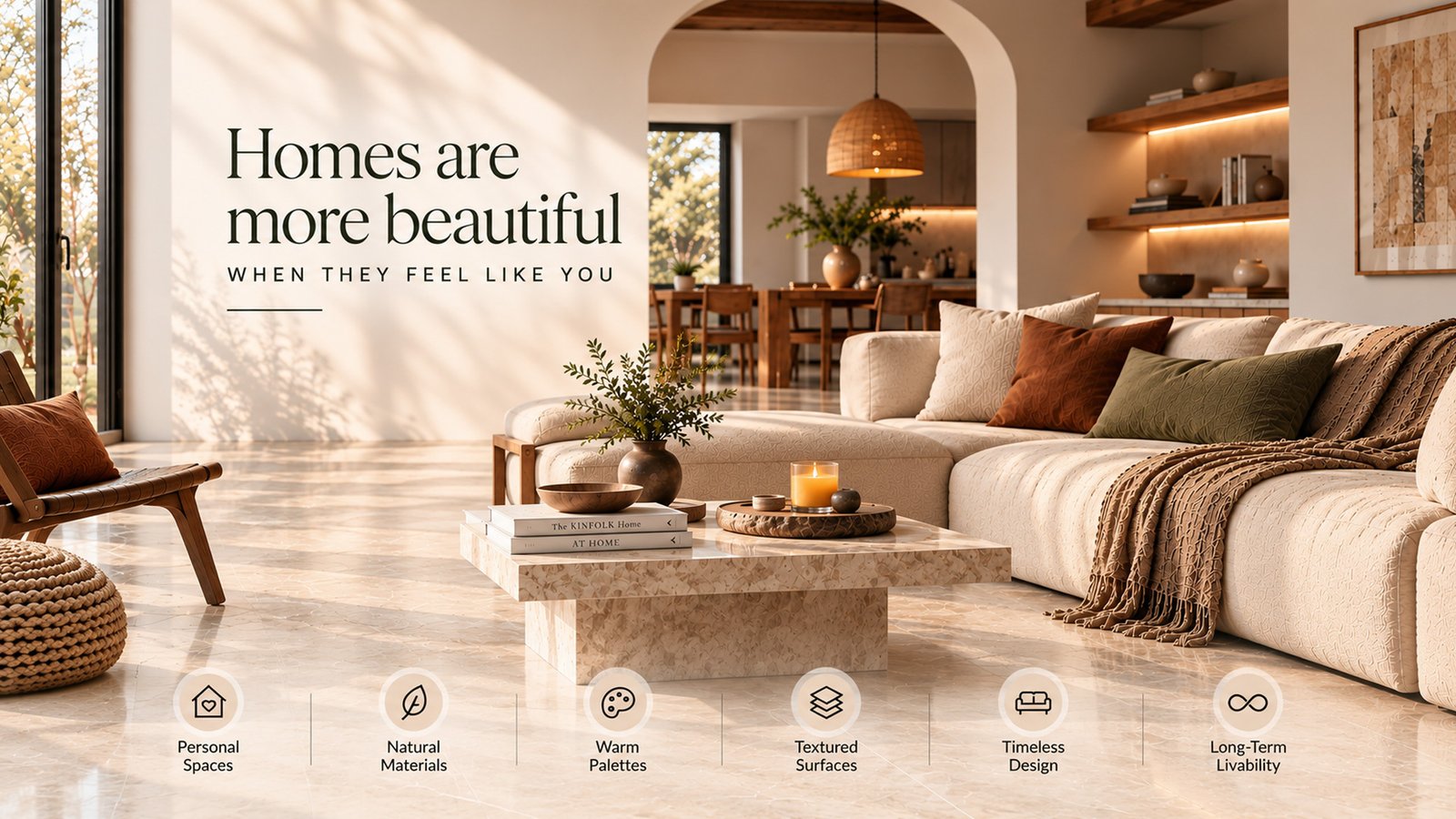
A large-format marble-look surface, for example, can move from a living room floor to a statement wall or bathroom environment while maintaining the same overall aesthetic language.
Imagine entering a home where the entryway introduces a subtle stone-inspired surface.
The same visual language continues into the living area.
It appears again in the kitchen.
A related finish creates continuity in the bathroom.
The spaces don't look identical.
Instead, they feel connected.
This is one of the most sophisticated uses of modular surface design.
The goal isn't to make every room look the same.
The goal is to make the entire property feel like it belongs to one architectural story.
This approach is particularly effective in luxury interiors, where consistency often creates a stronger impression than excessive variation.
A home built today may not have the same purpose ten years from now.
A spare bedroom might become a home office.
A children's room might eventually become a guest suite.
An open living area might be reorganized as a family grows.
Good design anticipates change.
Modular surfaces can support that flexibility by creating a foundation that doesn't depend on one specific furniture arrangement or lifestyle.
When the surface remains visually relevant, the room can evolve without requiring a complete redesign.
This is particularly important for homeowners who want their interiors to remain adaptable without constantly undergoing expensive renovations.
Scalable surface design isn't limited to residential architecture.
Commercial environments constantly evolve.
A retail space may change its branding.
A hotel may renovate individual areas at different times.
A restaurant may redesign its dining experience.
An office may move from traditional workstations toward collaborative spaces.
In these environments, flexibility isn't simply desirable.
It's practical.
Surface systems that can work across different zones allow designers to maintain a recognizable visual identity while adapting individual spaces to new requirements.
The result is a more cohesive environment that can evolve without losing its architectural character.
Repetition has a fascinating role in architecture.
Used poorly, it can feel monotonous.
Used thoughtfully, it creates rhythm.
Think of the repetition of windows along a modern façade, architectural columns in a grand hall, or similar materials flowing through multiple rooms.
Surface design can work in exactly the same way.
A recurring tile pattern or material language creates visual rhythm throughout a property.
The trick is knowing when to repeat and when to introduce variation.
That balance is what keeps a modular interior from feeling predictable.
The same material can communicate very different emotions depending on where and how it is used.
A subtle stone pattern covering a large floor can feel calm and architectural.
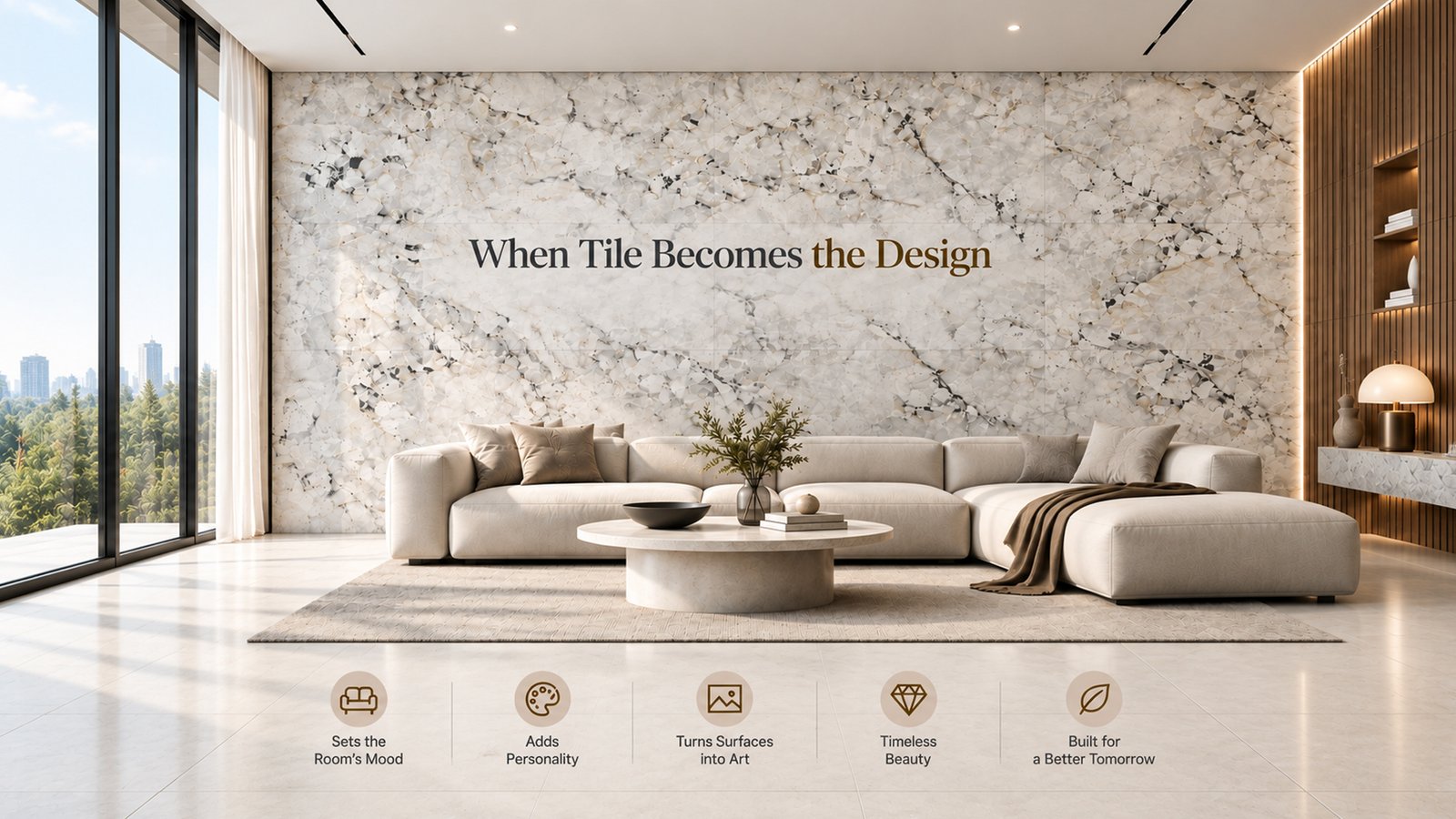
The same pattern used selectively on a feature wall can become more expressive.
A textured finish across a bathroom can create a spa-like atmosphere.
Used in a smaller architectural detail, it can become an accent.
This is why scalable design is ultimately about more than dimensions.
It's about how a material behaves when its context changes.
There is sometimes a misconception that flexible design means generic design.
The opposite can be true.
When designers have a versatile surface system to work with, they can make more confident architectural decisions.
They can experiment with scale.
They can create visual transitions.
They can combine finishes.
They can maintain continuity across different environments.
Instead of limiting creativity, modularity can give creativity a stronger framework.
The designer still controls the composition.
The surface simply provides more possibilities.
For homeowners, the appeal is ultimately very practical.
Nobody wants to choose a beautiful material today only to discover that it becomes difficult to work with when the home changes later.
A versatile surface provides greater freedom.
It can support different furniture styles.
It can accommodate changing décor.
It can work across multiple rooms.
It can remain relevant as personal tastes evolve.
That makes surface selection less about choosing a finish for a single room and more about investing in the long-term visual language of the home.
Architecture is becoming increasingly fluid.
Homes are multifunctional.
Commercial spaces are constantly evolving.
Designers are working across increasingly diverse environments.
As a result, materials need to do more than look beautiful.
They need to adapt.
They need to perform.
They need to create continuity.
And they need to provide designers with enough flexibility to respond to different scales and applications.
This is where premium vitrified tiles have a significant advantage.
Their combination of durability, design variety, finish options, and format flexibility makes them particularly suited to modern architectural thinking.
At Flavour Granito, surface design is approached with an understanding that contemporary architecture doesn't fit into one fixed formula.
Different spaces demand different expressions.
Yet those expressions can still belong to the same design language.
Flavour Granito's range of premium vitrified surfaces brings together sophisticated aesthetics, contemporary finishes, natural inspirations, and versatile formats that allow architects and designers to explore that flexibility.
Whether creating an expansive residential interior, a refined hospitality environment, or a contemporary commercial project, the right surface can move with the architecture rather than restricting it.
That is the real potential of scalable surface design.
Not simply making one material available in different spaces, but giving designers more freedom to imagine what those spaces can become.
The future of interior design isn't necessarily about choosing more materials.
It's about choosing smarter materials.
Materials that can adapt to different scales.
Materials that can create continuity without monotony.
Materials that support changing lifestyles.
Materials that remain beautiful as architecture evolves.
Scalable and modular surface design reflects a broader shift in the way we think about interiors.
A tile is no longer simply something that covers a floor or wall.
It can become part of a larger architectural system one capable of creating rhythm, continuity, flexibility, and identity across an entire environment.
And as modern spaces continue to become more adaptable, the surfaces within them will need to do the same.
The future belongs to materials that don't simply fit the space they're given, but give designers more possibilities for what that space can become.
What started 25 years ago in Morbi, India’s ceramic hub, has grown into a trusted global brand. At Flavour Granito, we’ve built our legacy on creating tiles that blend artistry.
Quick Links
Available Sizes
Flavour Granito © . All rights reserved | Design and Managing By Roex Design