
Choosing the right bathroom floor tiles involves more than finding a colour or pattern that matches your interior. Bathroom floors are regularly exposed to water, humidity, cleaning products, and everyday foot traffic, so the tiles must balance visual appeal with safety, durability, and ease of maintenance.
From elegant marble-look surfaces to understated natural finishes, the right tiles can transform a bathroom into a space that feels cohesive, comfortable, and beautifully designed.
For homeowners, architects, and interior designers, understanding tile materials, finishes, sizes, and performance specifications makes it easier to select a product suited to the space. Flavour Granito offers a variety of ceramic and vitrified tile designs that can help bring different bathroom aesthetics to life.
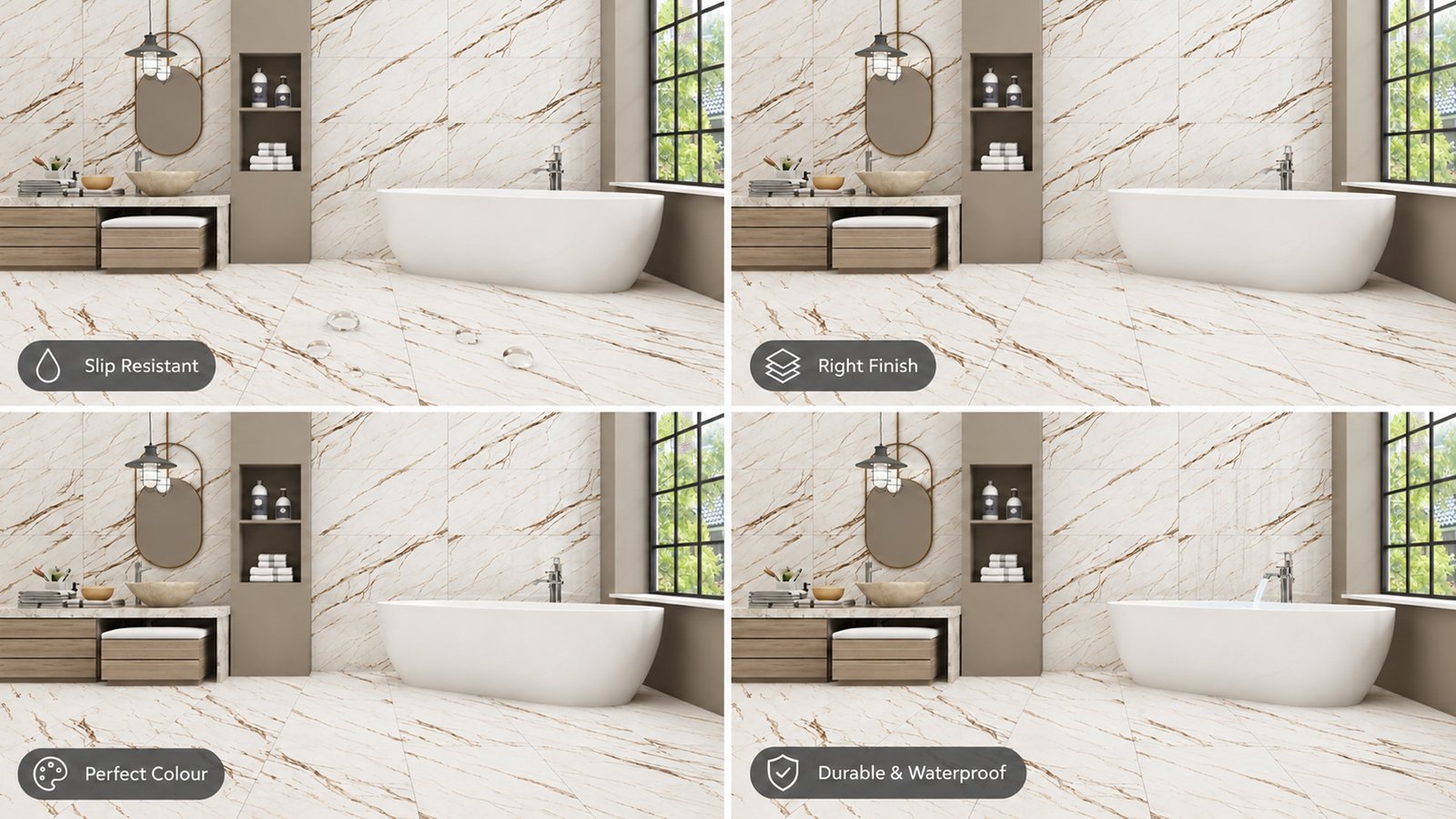
Safety should be one of the first considerations when choosing bathroom flooring. Water, soap, and shampoo can make surfaces slippery, particularly in shower areas.
A tile's appearance alone does not indicate how much grip it provides. Glossy surfaces may look attractive, but they should not automatically be considered suitable for wet floors.
When comparing bathroom floor tiles, look for:
Always verify the product's technical specifications before installation. A tile suitable for a bathroom wall may not be appropriate for a shower floor.
Ceramic and vitrified tiles are both used in interior design, but their properties can differ depending on the product and manufacturing process.
Ceramic tiles offer a wide range of colours, patterns, and finishes. They can be suitable for bathroom flooring when the specific product is designed and rated for that application.
Vitrified tiles are manufactured to achieve low water absorption and are available in a variety of contemporary designs. Their performance characteristics make them worth considering for bathroom flooring, provided the selected product has the appropriate surface and slip-resistance properties.
Rather than choosing based on the material category alone, compare the technical data for each product, including water absorption, breaking strength, surface finish, and suitability for wet areas.
Flavour Granito offers ceramic and vitrified tile options in different designs and formats. Buyers can explore the Flavour Granito collection and review product-specific information when selecting tiles for a bathroom project.
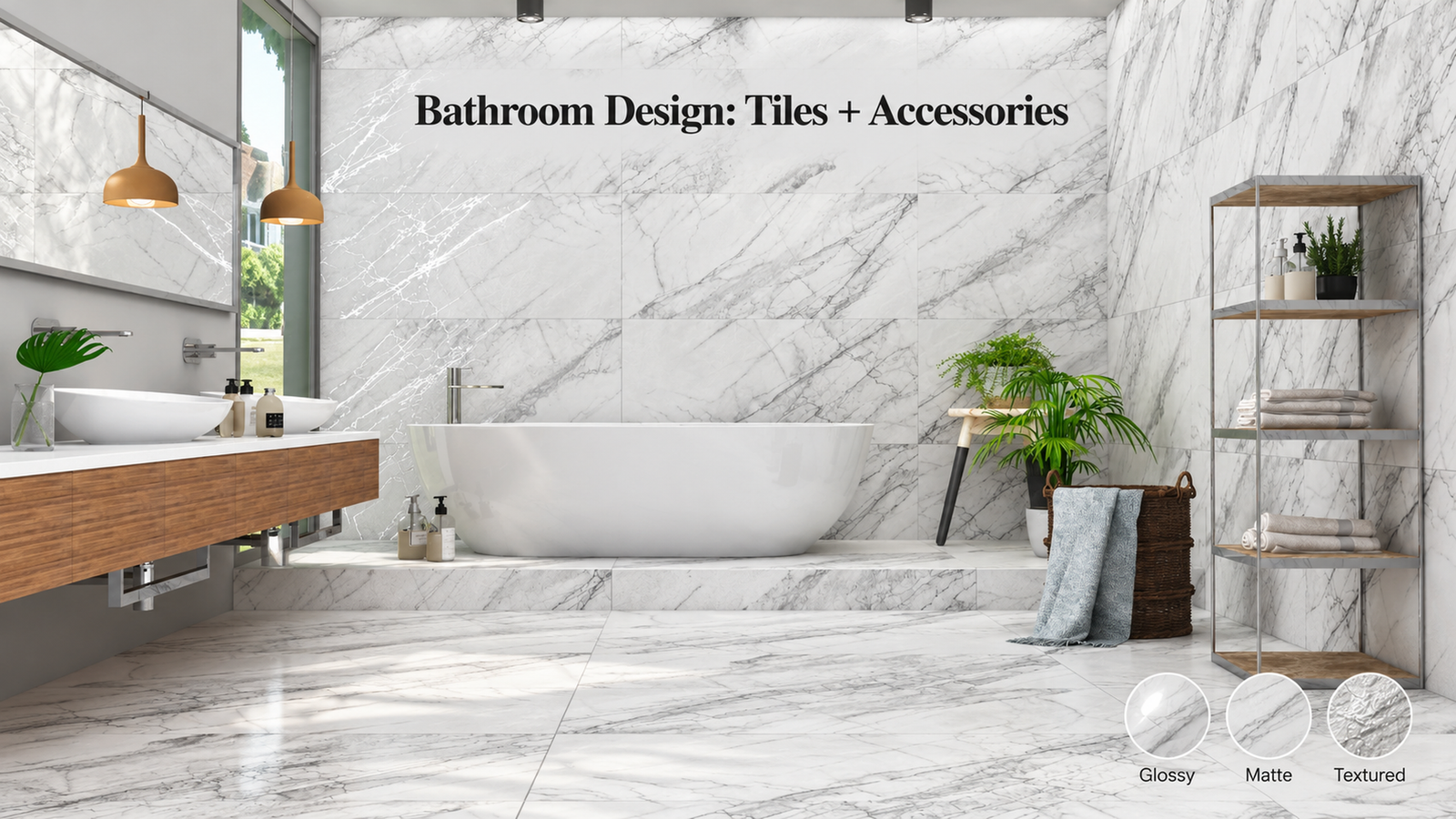
The finish affects both the appearance of a bathroom and how the floor performs in everyday conditions.
Matte-finish tiles can create a soft, contemporary look that complements natural materials, neutral colours, and minimalist interiors. However, matte does not automatically mean slip-resistant, so check the tested performance of the individual product.
Textured tiles can be considered for areas where additional surface grip is required, provided their technical ratings suit the intended use. Keep cleaning requirements in mind, as some textured surfaces may need more attention to remove soap residue and dirt.
Glossy tiles create a reflective, polished appearance and can work beautifully on bathroom walls. For floors, use them only where the product's documented slip-resistance performance and intended application make them appropriate.
For a coordinated design, consider using a floor tile with a suitable matte or textured finish alongside glossy or decorative wall tiles. This creates visual contrast without relying on the same finish throughout the room.
Tile colour influences how spacious, bright, and inviting a bathroom feels. The best choice depends on the room's dimensions, available light, cabinetry, and overall interior style.
shades for a brighter appearance
White, ivory, beige, and light grey tiles can make a bathroom feel airy and visually open. They work particularly well with white sanitaryware, glass shower screens, and simple fittings.
Grey tiles for contemporary interiors
Grey bathroom floor tiles create a versatile foundation for modern spaces. Pair lighter grey flooring with white walls for a clean look, or combine medium grey tiles with warm wood tones to soften the overall palette.
Beige and natural tones for warmth
Beige and stone-inspired colours create a welcoming atmosphere and coordinate well with timber-look vanities, brushed-metal fittings, and neutral wall tiles.
Dark tiles for contrast
Charcoal and deeper grey shades can create a dramatic, sophisticated effect. They are often most effective when balanced with lighter walls and adequate lighting. Keep in mind that dust, water marks, and soap residue may be more noticeable on some dark finishes.
Before finalising your choice, view samples under the bathroom's actual lighting conditions. This helps you understand how the colour and surface will look once installed.
Tile size affects the visual rhythm of a bathroom, the number of grout joints, and the complexity of installation.
Large-format tiles can create a more continuous appearance with fewer grout joints across the same area. They are often used in contemporary bathrooms where clean lines and expansive surfaces are desirable.
Medium-format tiles offer flexibility for many standard bathroom layouts and can provide a balance between visual continuity and installation practicality.
Smaller tiles and mosaics can be useful in shower areas because their additional grout joints may help accommodate sloping surfaces. Their suitability still depends on the tile's slip resistance, the layout, and the installation system.
Large tiles are not automatically the best option for every bathroom. Floor gradients, drainage positions, room dimensions, tile thickness, and installer expertise all influence the final result.
For a polished design, coordinate the floor format with the wall tile size and layout. Thoughtful alignment can make the room feel more cohesive.
Bathroom flooring does not have to be plain to be practical. Natural-inspired designs allow you to introduce character while maintaining a cohesive colour palette.
Marble-look tiles bring veining and movement into the room, making them suitable for elegant and contemporary interiors. Stone-inspired designs can create a more understated appearance, while wood-look tiles offer a warmer visual alternative to traditional stone patterns.
When selecting a patterned floor, consider how it will work with the walls. A distinctive floor can become the main feature when paired with simpler wall tiles. Alternatively, a restrained floor design can balance a decorative shower wall or vanity backdrop.
Flavour Granito's range of natural-inspired and contemporary tile designs provides options for exploring different bathroom aesthetics. Check the specifications of each selected product to confirm its suitability for floor installation and wet conditions.
A bathroom floor should remain practical after the renovation is complete. Maintenance depends on the tile surface, grout, cleaning routine, and installation quality.
Before choosing a tile, consider how easily its surface can be cleaned and whether its texture is likely to retain residue. Use cleaning products recommended for the selected material and avoid harsh chemicals unless the manufacturer confirms they are suitable.
Grout colour also affects the overall appearance. A matching shade creates a more uniform look, while contrasting grout highlights the tile pattern. Proper grout selection and installation help support the performance of the finished floor.
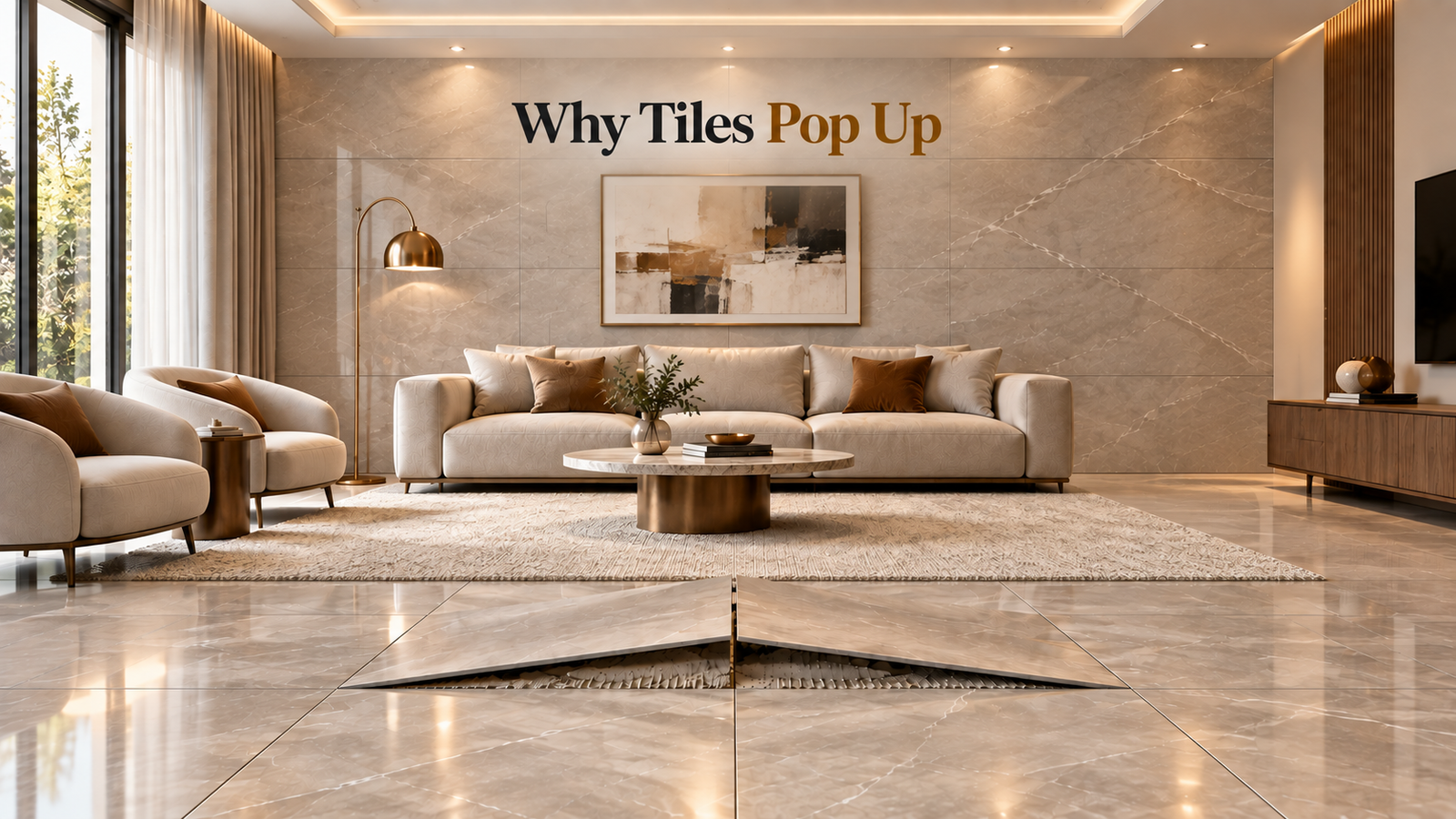
Waterproofing beneath the tiles, correct drainage slopes, and suitable expansion joints where required are equally important. Tiles alone do not make a bathroom waterproof; the complete installation system must be planned correctly.
Before placing your order, make sure you have considered these essential points:
Confirming these details before purchase can help reduce design compromises and avoid choosing a beautiful tile that is unsuitable for the space.
The best bathroom floor tiles bring together design, performance, and practical suitability. A carefully selected colour palette can make the room feel brighter or warmer, while the right finish and format help establish the desired interior style.
Flavour Granito offers a diverse portfolio of ceramic and vitrified tiles, including contemporary designs and natural-inspired surfaces for different interior preferences. By reviewing the product specifications alongside the visual design, homeowners and professionals can make a more informed choice for their bathroom projects.
Whether you are planning a minimalist bathroom, an elegant marble-inspired interior, or a warm, natural-looking space, start with the floor's technical requirements and build the design around them.
Explore the Flavour Granito tile collection to discover designs for your next bathroom project.
12-10-2026
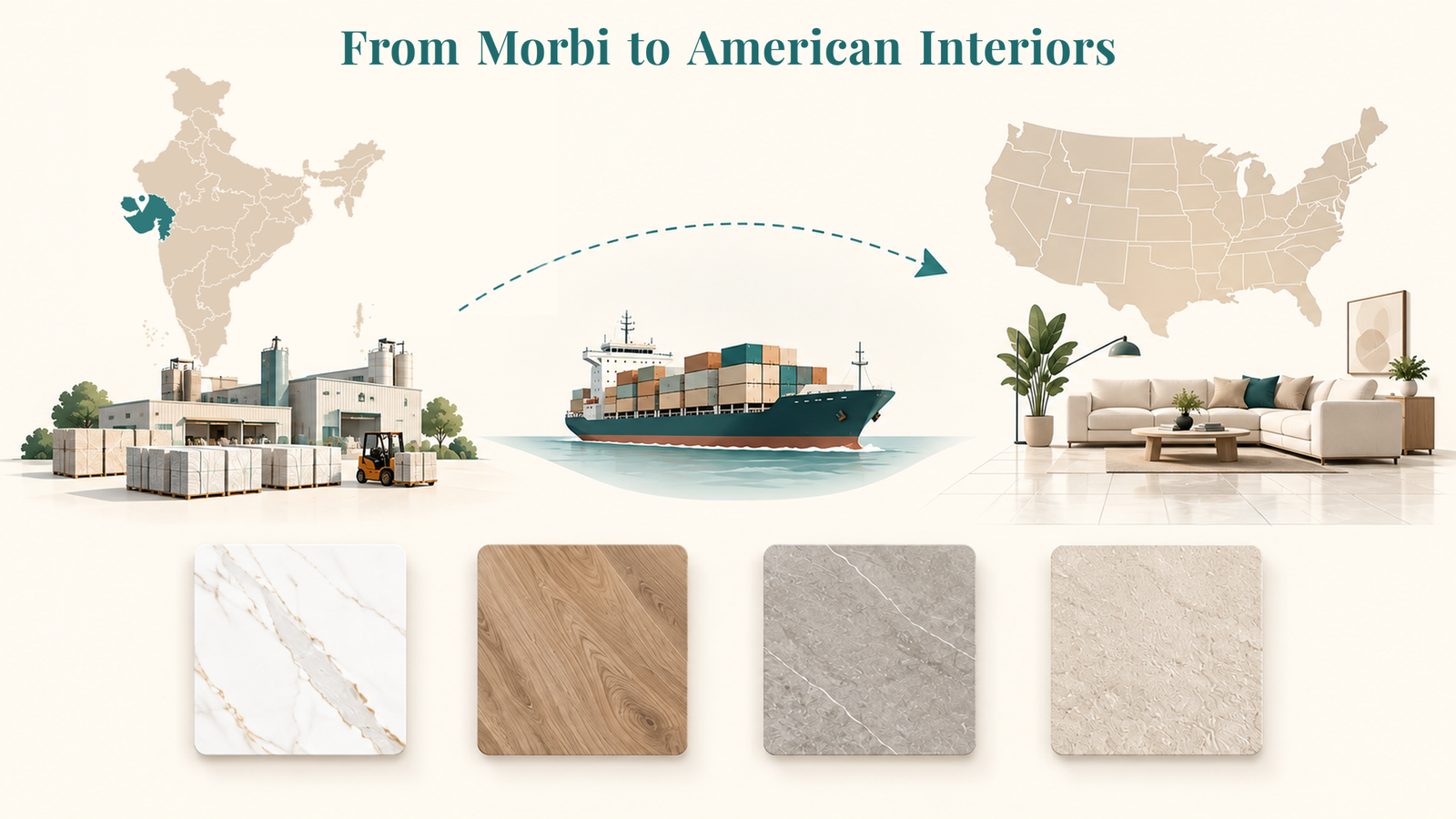
What started 25 years ago in Morbi, India’s ceramic hub, has grown into a trusted global brand. At Flavour Granito, we’ve built our legacy on creating tiles that blend artistry.
Quick Links
Available Sizes
Flavour Granito © . All rights reserved | Design and Managing By Roex Design