
For years, quartz has occupied a comfortable position in the American interiors market.
It became a favorite for kitchen countertops, bathroom vanities, hospitality projects, and high-end residential spaces because it offered a compelling combination of appearance, consistency, durability, and design flexibility.
But in 2026, the conversation around quartz in the United States has moved beyond design.
It has entered the world of trade policy.
The U.S. International Trade Commission determined in April that increased imports of quartz surface products were a substantial cause of serious injury to the domestic industry producing competing products. In May, the Commission recommended a four-year tariff-rate quota as a potential remedy.
The situation then moved from recommendation to policy.
On July 31, the Trump administration announced a tariff-rate quota on imported quartz surface products, with the new measure taking effect August 15.
For homeowners, architects, designers, fabricators, distributors, and surface brands, this raises a much bigger question:
The answer isn't simply that quartz becomes more expensive.
The more interesting story is how the change could influence material selection, sourcing strategies, project planning, and the relationship between quartz and alternative surfaces.
Quartz didn't become popular in the U.S. by accident.
It answered several needs at once.
Homeowners wanted the sophisticated appearance associated with natural stone but also wanted predictable performance and easier maintenance.
Designers wanted broad color and pattern options.
Builders wanted materials that could work across large residential developments.
Fabricators and distributors benefited from a product category with strong demand across kitchens and bathrooms.
Over time, engineered quartz became deeply embedded in the American remodeling and new-home market.
That makes changes to its import environment significant.
When a material becomes part of a construction ecosystem, any major change in its cost or availability can affect more than the material itself.
It can influence the decisions made around it.
The 2026 development came through a U.S. global safeguard investigation under Section 201 of the Trade Act.
The USITC began investigating imported quartz surface products after a petition from the Quartz Manufacturing Alliance of America. In April, the Commission voted 2–1 that increased imports were a substantial cause of serious injury to the U.S. industry.
The Commission subsequently recommended a tariff-rate quota.
Its May recommendation proposed a four-year structure with an annual import volume and different tariff rates depending on whether imports remained within or exceeded the quota.
The final policy was then established by presidential proclamation.
For the surface industry, this distinction matters.
A tariff isn't simply a number added to an invoice.
It can influence sourcing decisions throughout the supply chain.
When the cost or availability of one major surface category changes, buyers don't necessarily stop building.
They reconsider their options.
That is where the 2026 tariff environment could become particularly interesting.
Architects may look more closely at alternative materials.
Designers may evaluate porcelain and vitrified surfaces for applications previously dominated by other materials.
Builders may reassess sourcing strategies.
Distributors may diversify inventories.
Homeowners may become more interested in understanding the difference between various surface categories before committing to a renovation.
In other words, trade policy can indirectly influence design decisions.
Material selection has traditionally been driven by aesthetics first.
Does the surface have the right veining?
Does the color work with the cabinetry?
Does it create the desired luxury effect?
Those questions aren't going away.
But increasingly, professionals also have to consider:
Where is the material coming from?
How predictable is the supply?
What will it cost when it reaches the project?
How long will it take to procure?
Are there comparable alternatives?
Can another surface deliver the desired architectural appearance with greater flexibility?
This broader way of evaluating materials could become increasingly important in the U.S. market.
Potentially, yes but not simply because of tariffs.
Porcelain surfaces have already been gaining attention because of their design versatility and performance characteristics.
Their ability to replicate marble, limestone, travertine, concrete, and other natural materials gives designers considerable creative freedom.
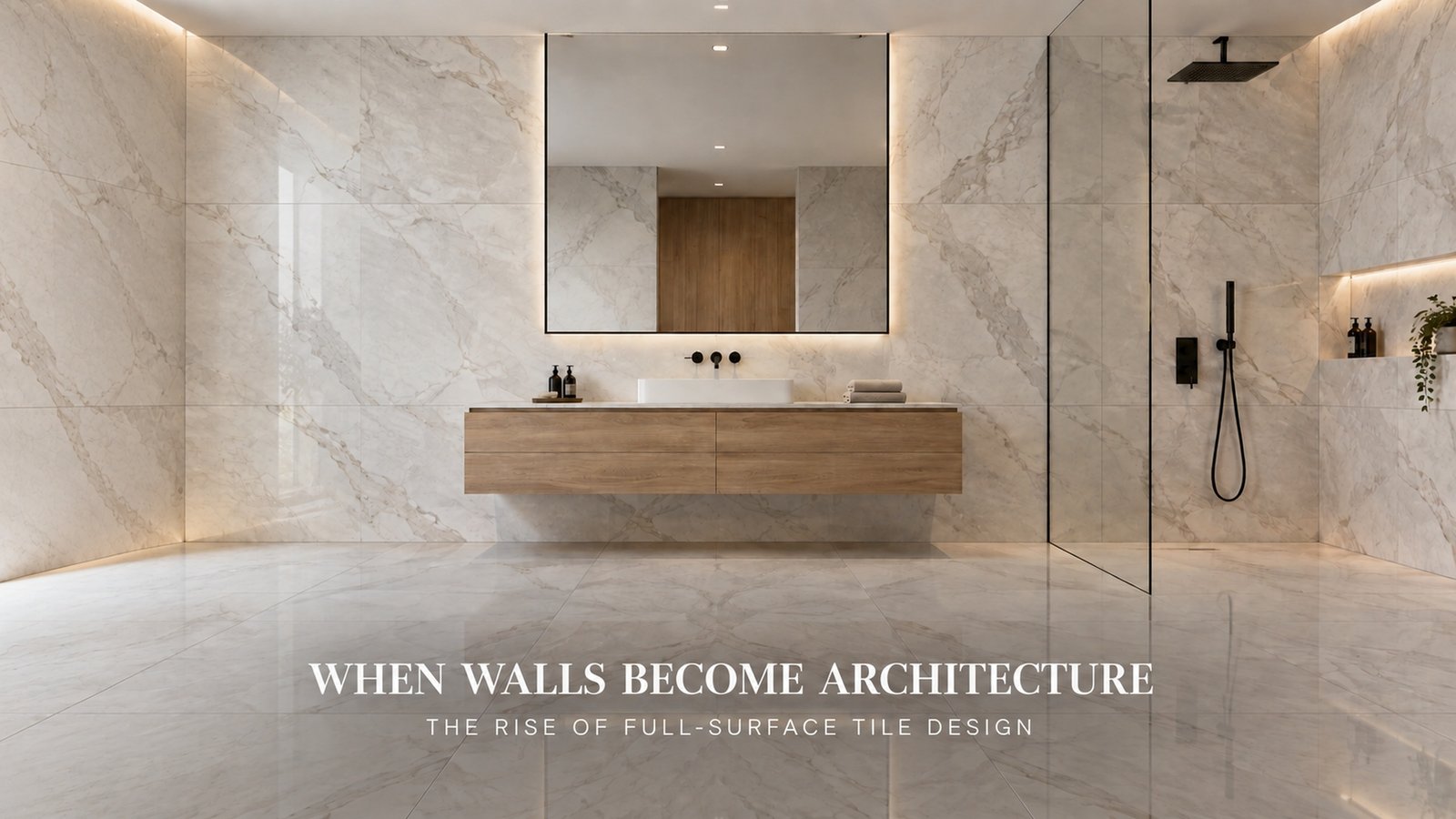
Large-format options can also create expansive visual surfaces with fewer grout lines.
For homeowners who want the visual character of premium stone-inspired interiors without being locked into one material category, this creates another avenue worth considering.
The important point is not that one surface will suddenly replace another.
It is that buyers may become more open to comparing materials they previously treated as separate categories.
Modern interiors are already moving toward material flexibility.
A kitchen may combine several surfaces.
A bathroom may use porcelain on walls and floors while incorporating another material for the vanity.
A commercial project may use different finishes to distinguish zones while maintaining a unified visual language.
This approach gives designers more freedom.
Instead of asking which material should dominate the entire project, designers can ask:
That mindset becomes particularly valuable when supply chains, pricing, or import conditions change.
One of the most interesting consequences of market disruption is that it often makes buyers pay closer attention.
A homeowner who previously thought of surfaces simply as "quartz" or "tile" may begin comparing:
They may start asking about durability, maintenance, sourcing, installation, and long-term value.
That is ultimately a positive development for the surface industry.
Better-informed buyers tend to make better material decisions.
For design professionals, flexibility could become an increasingly valuable advantage.
A strong material specification should satisfy the aesthetic brief while also making sense from a procurement and performance perspective.
That doesn't mean abandoning quartz.
It means avoiding unnecessary dependence on one material category.
Designers who understand the strengths of multiple surface technologies can respond more confidently when market conditions change.
They can preserve the visual intent of a project while adapting the material strategy behind it.
That's especially important for large residential developments, hospitality projects, and commercial environments where procurement decisions can have a significant impact on timelines and budgets.
The quartz situation also highlights something much larger happening across the global surface industry.
For years, international sourcing allowed manufacturers, distributors, and designers to access enormous variety.
But today's buyers are increasingly aware that global supply chains are influenced by more than manufacturing capacity.
Trade policy matters.
Tariffs matter.
Shipping matters.
Geopolitical conditions matter.
Regulatory decisions matter.
A material can be aesthetically perfect for a project and still become difficult to source under changing market conditions.
This means the next generation of surface procurement may place greater emphasis on resilience as well as design.
For manufacturers, the changing market creates both pressure and opportunity.
Brands serving the U.S. market will need to demonstrate more than beautiful collections.
They will need to communicate reliability, quality, consistency, innovation, and an understanding of what American buyers actually need.
This is where surface brands with broad product expertise can differentiate themselves.
The future may belong to companies capable of connecting global design inspiration with practical market realities.
For a global surface brand such as Flavour Granito, developments in the U.S. quartz market are part of a much larger conversation about how modern surfaces are selected.
American buyers are increasingly looking for materials that combine sophisticated aesthetics with performance, durability, versatility, and long-term value.
Premium tiles can play an important role within that broader surface ecosystem.
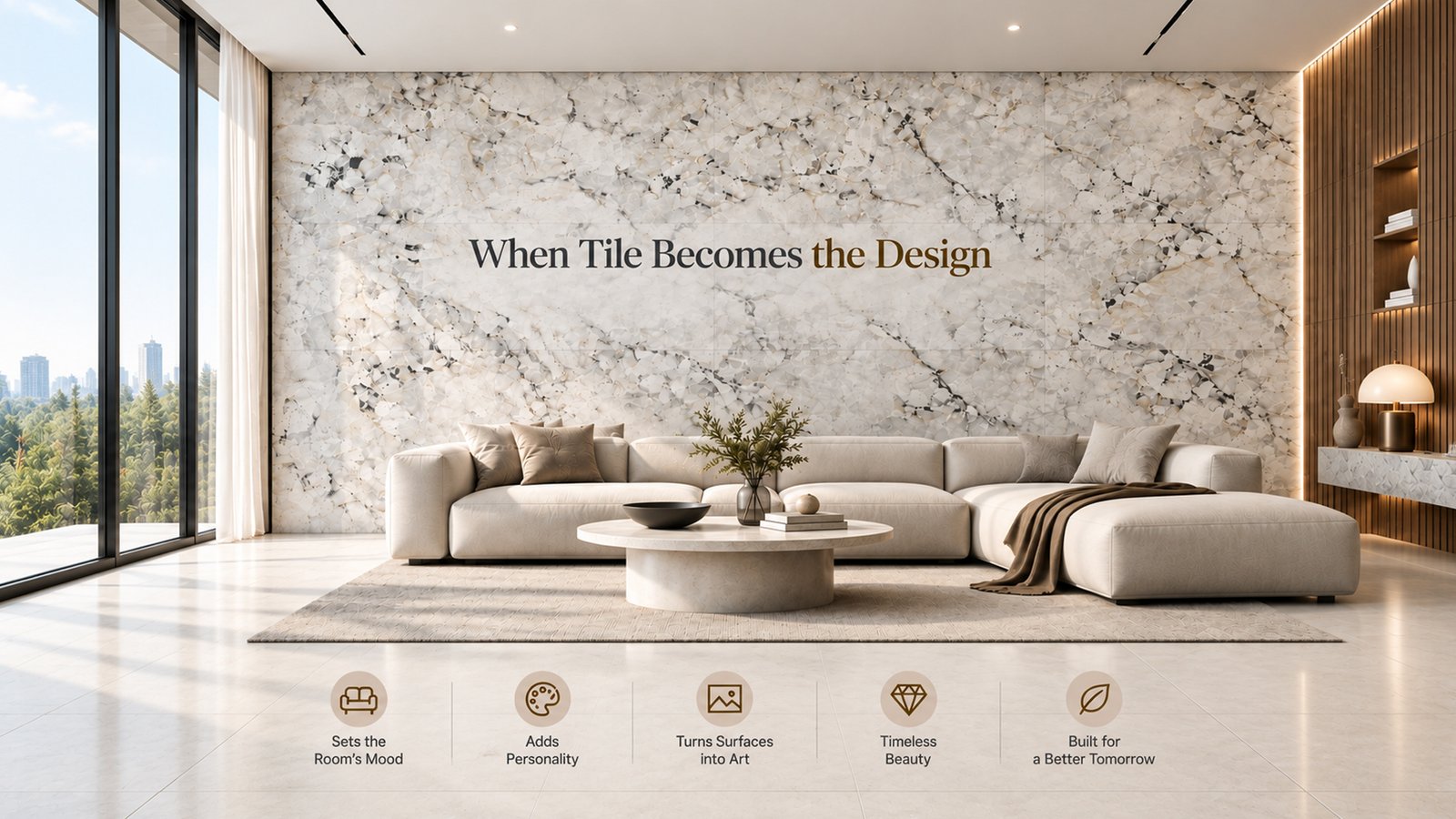
Marble-inspired designs can bring architectural drama.
Stone-inspired finishes can introduce natural character.
Large-format surfaces can create visual continuity.
Contemporary textures can add depth without excessive decoration.
The opportunity isn't to position one material against another.
It's to give architects, designers, and homeowners more choices for creating exceptional spaces.
The quartz tariff story isn't only about quartz.
It's a reminder that the materials used in modern architecture exist within a much larger system.
Design.
Manufacturing.
Trade.
Logistics.
Pricing.
Technology.
Consumer preferences.
All of these forces influence what eventually reaches a kitchen, bathroom, hotel, or luxury home.
For the design industry, that means surface selection is becoming increasingly strategic.
The best material isn't always simply the most fashionable one.
It is the material that delivers the right combination of appearance, performance, availability, value, and suitability for the project.
The U.S. quartz market will continue to evolve as import volumes, pricing, domestic production, and sourcing strategies respond to the new trade environment.
For buyers, the smartest response isn't panic.
It's awareness.
Understand where materials come from.
Compare surface categories.
Look beyond a single specification.
Consider long-term availability.
Evaluate performance alongside appearance.
And most importantly, work with suppliers and design professionals who understand both the material and the market surrounding it.
Because today's surface decisions can have consequences far beyond the showroom.
America's surface industry is entering an interesting period.
The 2026 quartz trade measures have introduced another layer of complexity into a market that was already changing through new technologies, evolving design preferences, and growing demand for premium architectural surfaces.
But disruption can also create opportunity.
It encourages buyers to explore alternatives.
It pushes designers to think more strategically.
It motivates manufacturers to innovate.
And it reminds the industry that great design isn't dependent on one material.
The future of American surfaces may ultimately be defined not by one category winning over another, but by a broader and more informed approach to material selection.

What started 25 years ago in Morbi, India’s ceramic hub, has grown into a trusted global brand. At Flavour Granito, we’ve built our legacy on creating tiles that blend artistry.
Quick Links
Available Sizes
Flavour Granito © . All rights reserved | Design and Managing By Roex Design