
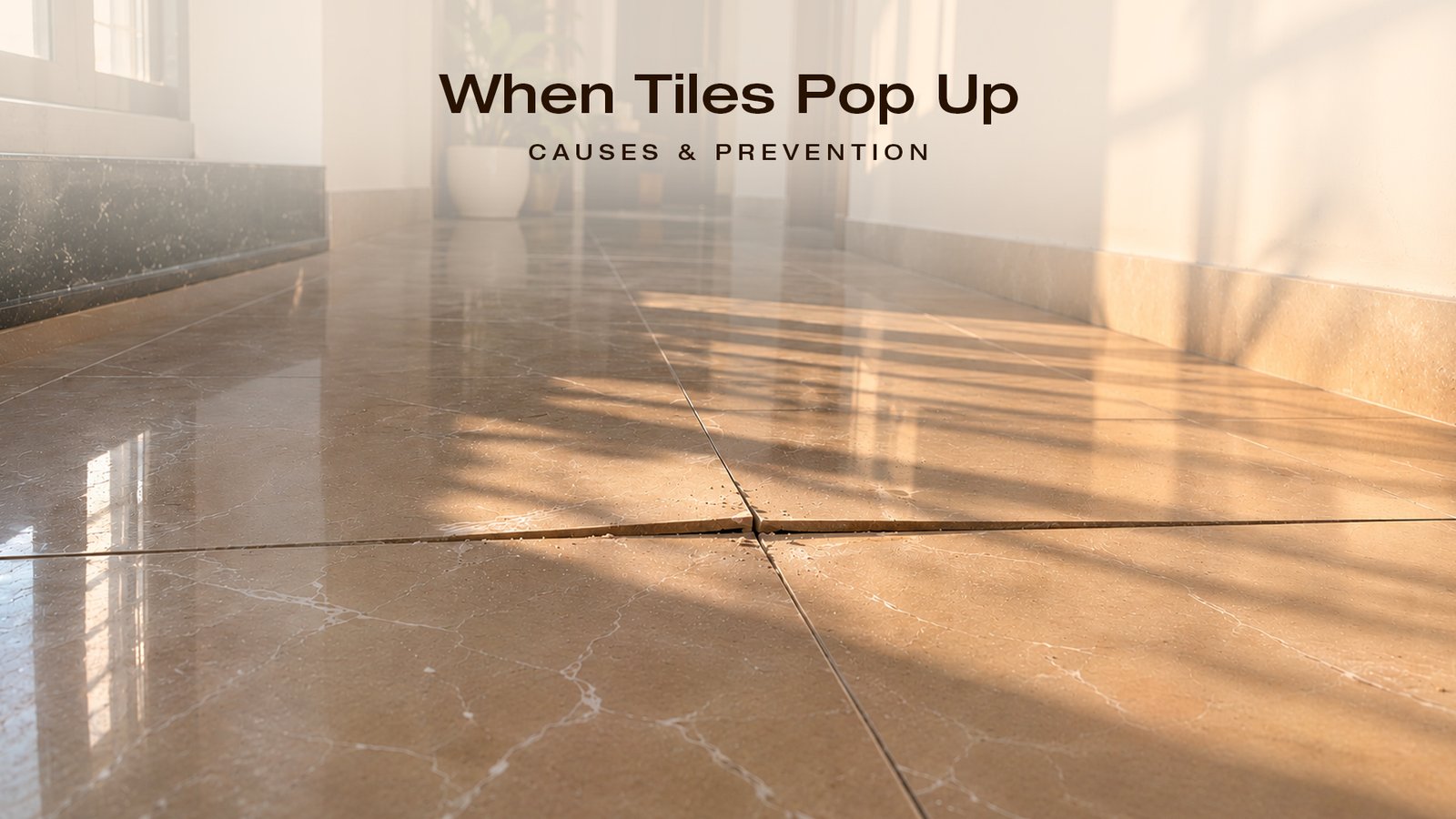
Tiles are designed to create durable, attractive surfaces, but even a beautifully finished floor can develop problems over time. One issue homeowners and property owners sometimes encounter is tile popping, where individual tiles become loose, lift from the floor, or suddenly detach from the underlying surface.
Beyond affecting the appearance of a space, popped tiles can create uneven flooring, trip hazards, and costly repair work. Understanding why tiles pop up is the first step toward preventing the problem.
For homeowners, architects, builders, and contractors, choosing quality tiles is important, but so is ensuring that the surface preparation, adhesive selection, and installation process are handled correctly.
At Flavour Granito, we believe that great flooring begins with the right combination of tile design, product selection, and proper installation.
Tile popping, sometimes called tile tenting, generally occurs when pressure develops beneath the tiled surface or when the bond between the tile and substrate weakens. Several factors can contribute to this problem.
One of the common reasons tiles pop up is inadequate space for natural expansion and contraction.
Changes in temperature and moisture can cause building materials to move slightly. When tiles are installed too tightly against walls or other fixed surfaces, this movement can create pressure within the tiled floor. Eventually, tiles may lift away from the substrate.
How to prevent it: Installers should provide appropriate perimeter and movement joints based on the project conditions and applicable installation standards. These joints allow the tiled surface to accommodate movement without building excessive pressure.
Not every tile adhesive is suitable for every tile type or installation condition. Using an inappropriate bonding material can weaken adhesion and increase the possibility of tiles becoming loose.
Large-format porcelain and vitrified tiles, for example, require careful consideration of adhesive compatibility, substrate conditions, and installation requirements.
How to prevent it: Select an adhesive specifically recommended for the tile type, size, substrate, and application. Follow the adhesive manufacturer's instructions for mixing, application, and curing.
A successful tile installation depends on the condition of the surface underneath. Dust, grease, loose material, unevenness, or moisture-related problems can interfere with proper bonding.
Even premium-quality tiles may not perform as expected when installed over an unsuitable or poorly prepared substrate.
How to prevent it: Before installation, ensure the substrate is clean, stable, sufficiently level, and suitable for tiling. Any cracks, moisture issues, or structural concerns should be assessed and addressed before work begins.
Applying adhesive unevenly or leaving significant voids beneath tiles can create weak bonding areas. These unsupported sections may become more vulnerable to stress, impact, and movement.
This is particularly important when installing larger tiles, where consistent adhesive coverage requires careful attention.
How to prevent it: Use the appropriate trowel and installation technique to achieve the coverage recommended for the tile and project. Back-buttering may also be required in certain installations, depending on tile size and manufacturer recommendations.
Moisture-related problems beneath a tiled surface can affect the installation over time. Similarly, movement or cracking in the underlying substrate may transfer stress to the tile layer.
These conditions can contribute to loose tiles, cracked grout, or other flooring defects.
How to prevent it: Identify potential moisture concerns before installation. Use suitable waterproofing systems where required, and ensure that the substrate is structurally sound. Movement joints should also be incorporated where the project specifications require them.
Tile installation involves several stages, and each requires sufficient time and attention. Rushing the process, disturbing freshly installed tiles, or allowing inadequate curing can compromise the bond.
How to prevent it: Follow the adhesive and grout manufacturer's recommended working and curing times. Avoid heavy traffic or placing loads on the newly tiled floor before it is ready for use.
Installation is a major part of flooring performance, but product selection matters too. Tiles should be chosen according to the intended application, project requirements, and expected usage.
Porcelain and vitrified tiles are popular choices for contemporary residential and commercial spaces because they offer a wide range of design possibilities and are manufactured for different flooring applications.
At Flavour Granito, our collection brings together a variety of tile styles and formats suited to different interior concepts. From understated natural looks to marble-inspired designs and contemporary finishes, the range gives homeowners, designers, and builders options to create cohesive flooring schemes.
Explore Flavour Granito's tile collection to discover designs for residential and commercial projects.
Before finalizing a tile, consider where it will be installed and how the space will be used.
For living rooms and bedrooms, design, format, and coordination with the interior palette may be key considerations. In high-traffic commercial areas, suitability for the expected traffic and maintenance requirements becomes especially important.
For larger spaces, large-format tiles can create a more continuous visual appearance, provided the substrate and installation method are appropriate for the selected format.
Flavour Granito offers multiple tile categories, sizes, and finishes to support different design requirements. Selecting the right product for the intended application helps create a more considered flooring solution.
Tile popping does not always happen without warning. Certain changes in the floor may indicate that an installation needs attention.
Look out for:
If these signs appear, have the installation assessed by a qualified tile professional. Addressing the underlying cause is more effective than simply replacing a loose tile.
Beautiful flooring is not just about the tile you see. It also depends on the preparation, materials, workmanship, and planning behind the finished surface.
Understanding the common reasons tiles pop up helps homeowners and professionals make better decisions before installation begins. Proper movement joints, compatible adhesives, a suitable substrate, and correct installation techniques all contribute to a more reliable tiled floor.
At Flavour Granito, we bring together contemporary tile designs, varied product categories, and formats to support a wide range of interior and architectural projects. When paired with professional installation and the right project specifications, the right tile can help bring a flooring vision to life.
Discover the possibilities with Flavour Granito and explore a collection designed to complement modern spaces.
What started 25 years ago in Morbi, India’s ceramic hub, has grown into a trusted global brand. At Flavour Granito, we’ve built our legacy on creating tiles that blend artistry.
Quick Links
Available Sizes
Flavour Granito © . All rights reserved | Design and Managing By Roex Design