
There was a time when designing a home began with a simple question:
Today, it often begins somewhere else.
A saved Instagram post. A Pinterest board. A short video showing a dream kitchen. A luxury bathroom spotted in a hotel halfway across the world. A living room that keeps appearing on your feed.
Social media has completely changed the way we discover interior design.
Inspiration that once belonged mainly to architects, designers and magazines is now available to everyone. A homeowner in India can discover a marble-inspired living room in Milan, a warm wooden interior in Copenhagen or a dramatic bathroom in Dubai within seconds.
And that is a good thing.
But there is a catch.
When everyone has access to the same inspiration, it becomes easy to create spaces that look beautiful, but don't necessarily feel personal.
The question homeowners are beginning to ask is changing.
Not just:
But:
That is where the idea of a life-worthy home begins.
And it is also where the role of materials becomes more important than ever.
Social media has given us more design inspiration than any generation before us.
But endless inspiration can also create endless repetition.
The same neutral interiors.
The same oversized island kitchens.
The same curved sofas.
The same marble-look surfaces.
The same carefully styled coffee tables.
The same beige-on-beige colour palettes.
None of these trends are inherently wrong. In fact, many of them are beautiful.
The problem begins when inspiration becomes imitation.
A room can follow every current trend and still say very little about the people living in it.
That is the paradox of social-media design culture.
The next phase of interior design is therefore not about rejecting inspiration.
It is about learning how to use it.
The best interior design has never really been about copying a photograph.
It is about understanding why the photograph appealed to you in the first place.
Maybe it was the openness of the space.
Maybe it was the way natural light moved across the floor.
Maybe it was the contrast between warm wood and cool stone.
Maybe it was the feeling of calm created by a restrained colour palette.
Or perhaps it was simply the sense of luxury created by a particular surface.
Once you understand why you like something, you can interpret it rather than reproduce it.
That distinction can completely change the way a home comes together.
Instead of asking, “How can I recreate this room?” homeowners can ask:
That is where personal design begins.
A home isn't a photograph.
It is breakfast before work.
It is children running through the living room.
It is a family gathering around the dining table.
It is coffee in the kitchen.
It is guests arriving unexpectedly.
It is a quiet Sunday afternoon.
It is the everyday activity that never appears in a perfectly styled interior photograph.
This is why beautiful design and practical design shouldn't be treated as opposites.
The goal isn't to choose between aesthetics and functionality.
A kitchen can be sophisticated and hardworking.
A bathroom can feel luxurious and still be easy to maintain.
A living room can be visually striking and still invite people to sit down.
And the surfaces throughout the home can contribute to both the appearance and the everyday experience of the space.
Flooring and wall surfaces are sometimes treated as background elements.
They shouldn't be.
A surface can influence the entire character of a room.
It changes how light is reflected.
It affects how furniture and décor are perceived.
It can make a space feel expansive, warm, dramatic, minimal or luxurious.
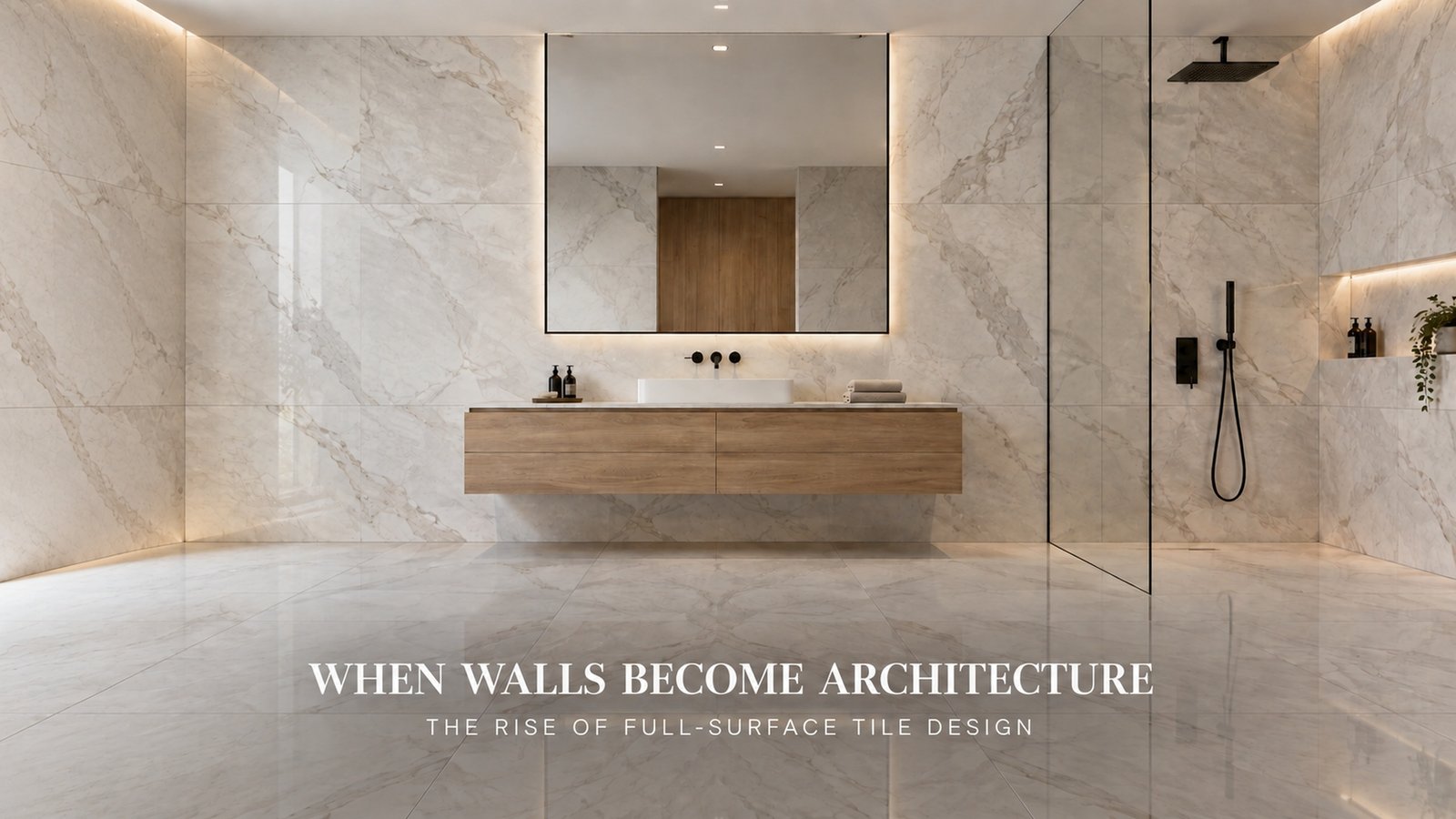
And unlike smaller decorative elements, tiles become part of the architecture itself.
This is where choosing the right surface becomes a design decision, not simply a finishing decision.
At Flavour Granito, the idea is reflected in the breadth of surfaces and formats available for different design directions. From Wooden and Matt finishes to Carving, High Glossy, Natural and Endless collections, the range allows designers and homeowners to approach spaces from very different aesthetic perspectives.
The result is not one prescribed style.
It is choice.
And choice is essential when the objective is to create a home that feels personal.
One of the most noticeable changes in contemporary interiors is the growing use of larger tile formats.
Large-format surfaces can create a stronger sense of continuity, particularly in open-plan spaces where too many visual breaks can make an interior feel fragmented.
Flavour Granito offers formats ranging from 600×600 mm and 600×1200 mm to larger options including 800×1600 mm, 1200×1200 mm and 1200×1800 mm.
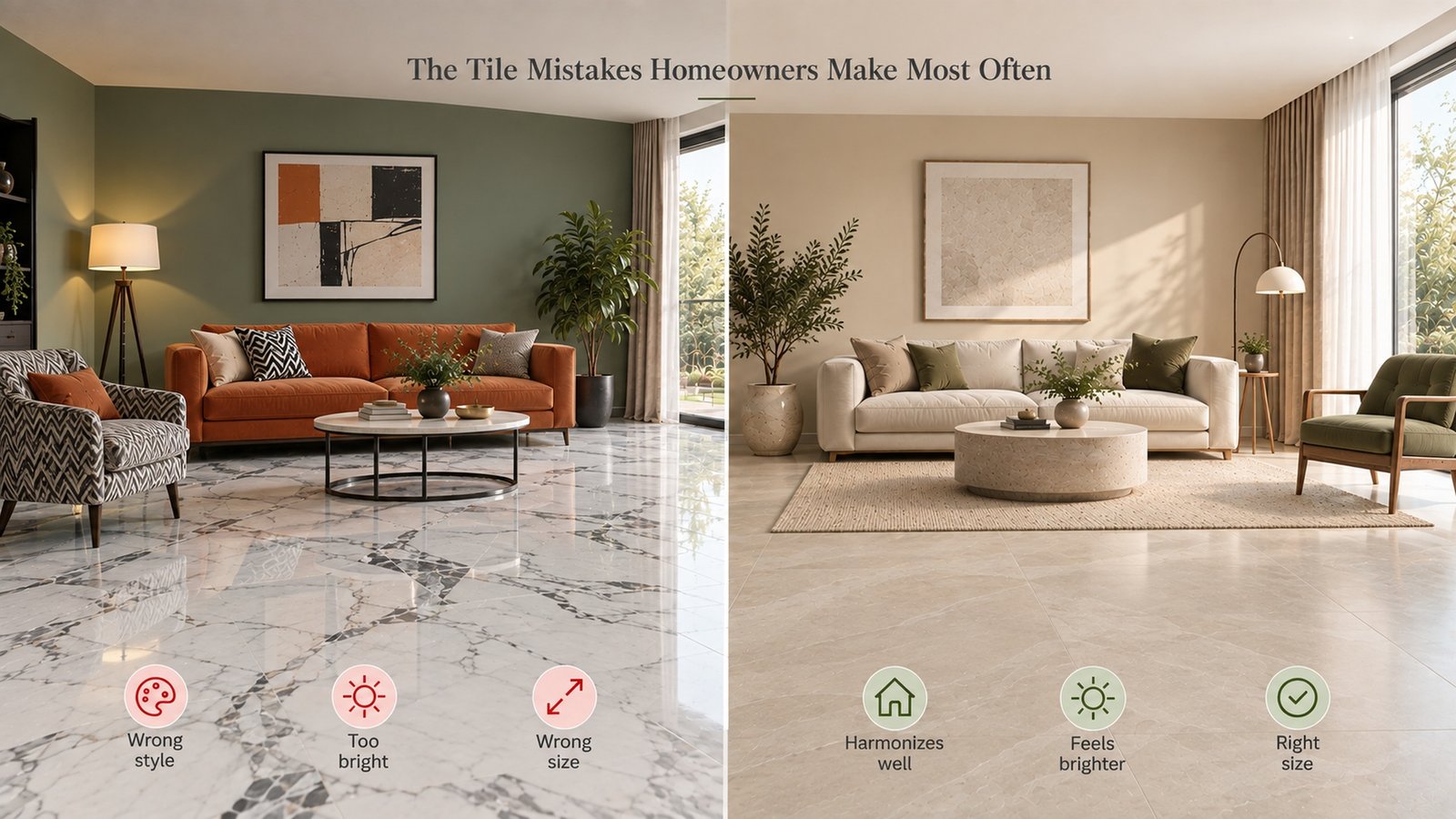
But size shouldn't be selected simply because something is currently trending.
The right format depends on the architecture, scale, layout and desired visual effect of the space.
That is another lesson social media can teach us:
For a while, minimalism often meant removing anything that created visual variation.
Today, interiors are moving in a more layered direction.
Subtle stone movement.
Marble-inspired patterns.
Wood-inspired surfaces.
Tactile finishes.
Matte textures.
Glossy surfaces.
Contrasting materials.
These details can give an interior depth without making it feel over-designed.
Flavour Granito's collections reflect this variety, with options spanning marble, wood and other visual expressions across different finishes and formats. Individual collections such as Pinnacle Statuario, Natural and Carving demonstrate how the same underlying idea, creating character through surface, can be interpreted in very different ways.
This is important because personalization doesn't always require more decoration.
Sometimes, the surface itself can become the statement.
The kitchen has become one of the most photographed spaces in modern homes.
But real kitchens are rarely still.
Food is prepared.
Coffee is made.
Groceries are unpacked.
Conversations happen.
Friends gather around the island.
Children sit at the counter.
And occasionally, something gets spilled.
That means a kitchen surface has to do more than photograph well.
It needs to fit the way the kitchen is actually used.
Flavour Granito's vitrified and porcelain tile solutions are designed around the combination of visual appeal and performance, with the company's technical specifications highlighting properties such as low water absorption, strength and dimensional precision.
The point isn't that practicality should replace aesthetics.
It is that aesthetic decisions become more valuable when they work in everyday life.
The same shift is happening in bathrooms.
The traditional idea of the “perfect bathroom” often followed a predictable formula:
White.
Minimal.
Polished.
Perfectly styled.
But there is no single way a bathroom should feel.
Some homeowners want a warm, natural retreat.
Others want the drama of marble-inspired surfaces.
Some prefer subtle matte textures.
Others are drawn to high-gloss finishes and a more luxurious atmosphere.
A bathroom should reflect the experience its user wants, not simply the image that happens to be trending.
This is where the range of tile finishes and visual styles becomes valuable.
Instead of forcing every space into one aesthetic, the surface can help establish the mood from the beginning.
Another habit influenced by social media is the idea that every element needs to coordinate perfectly.
Flooring matches the wall.
Walls match the cabinetry.
Cabinetry matches the furniture.
Furniture matches the décor.
But some of the most memorable interiors are built on contrast.
Warm wood against a cooler stone-inspired surface.
A textured finish beside a smoother one.
Contemporary furniture alongside something collected over time.
A restrained floor beneath a more expressive wall.
The result feels less like a showroom and more like a home.
And that is exactly the direction modern interiors are moving toward:
A home is never truly finished.
People change.
Families grow.
Children become teenagers.
Work patterns evolve.
Furniture gets replaced.
New artwork is collected.
Personal tastes develop.
That means a good interior should have enough flexibility to evolve with its occupants.
This is another reason to think carefully about permanent surfaces.
A tile should not force you into one décor style for the next decade.
Instead, it should provide a strong foundation that can work with different furniture, colours, lighting and accessories over time.
Choose a surface that works with today's home.
But also consider whether it will work with tomorrow's.
Luxury is changing, too.
For a long time, luxury interiors were associated with excess:
More decoration.
More expensive materials.
More visual drama.
Today, luxury can be much quieter.
It can be the feeling of walking into a beautifully proportioned room.
It can be a surface that creates visual continuity.
It can be a material selected because it feels right rather than because it is currently fashionable.
It can be the confidence to leave some space empty.
And it can be knowing that the materials around you were chosen thoughtfully.
It is about making every decision feel intentional.
This doesn't mean social media is disappearing from interior design.
It shouldn't.
The ability to discover new ideas, materials, designers and architectural styles is incredibly valuable.
The opportunity is to move from saving inspiration to interpreting it.
Save the living room you love.
Save the flooring that caught your attention.
Save the kitchen that made you stop scrolling.
Save the bathroom that feels like a retreat.
Then ask:
Is it the material?
The colour?
The scale?
The texture?
The light?
The sense of openness?
The mood?
Once you answer that, you don't need to copy the original space.
You can create your own version.
And that is where inspiration becomes identity.
This is ultimately where Flavour Granito fits into the changing conversation around interior design.
A tile isn't just something placed on a floor or wall after the design has already been decided.
It can influence the design from the beginning.
It can establish the visual language of a room.
It can create continuity between spaces.
It can introduce texture or contrast.
It can become a subtle foundation, or the defining visual element.
With collections across different looks, finishes, colours and sizes, Flavour Granito gives homeowners, architects and designers the flexibility to create spaces that don't have to follow a single aesthetic.
And because the company focuses on vitrified and porcelain tile solutions built around quality, technology and durability, the objective goes beyond creating a surface that looks good on day one.
It is about creating a surface that continues to belong in the space as life changes around it.
Perhaps the biggest lesson social media has given interior design is not that trends are bad.
It is that inspiration is everywhere, but identity still has to come from you.
The most successful homes of the future may not be the ones that perfectly recreate the latest viral interior.
They may be the ones that borrow an idea, reinterpret it and make it their own.
Homes where the kitchen is genuinely used.
Where the living room is comfortable enough to relax in.
Where materials have character.
Where surfaces complement the architecture.
Where design supports everyday routines.
And where beauty doesn't disappear when the camera does.
Social media can show us what is possible.
But the right materials, thoughtful design and personal choices are what make those possibilities work in real life.
Because ultimately, a beautiful home shouldn't simply be worth posting.
And that is where design becomes more than a trend.
It becomes part of everyday life.
12-10-2026
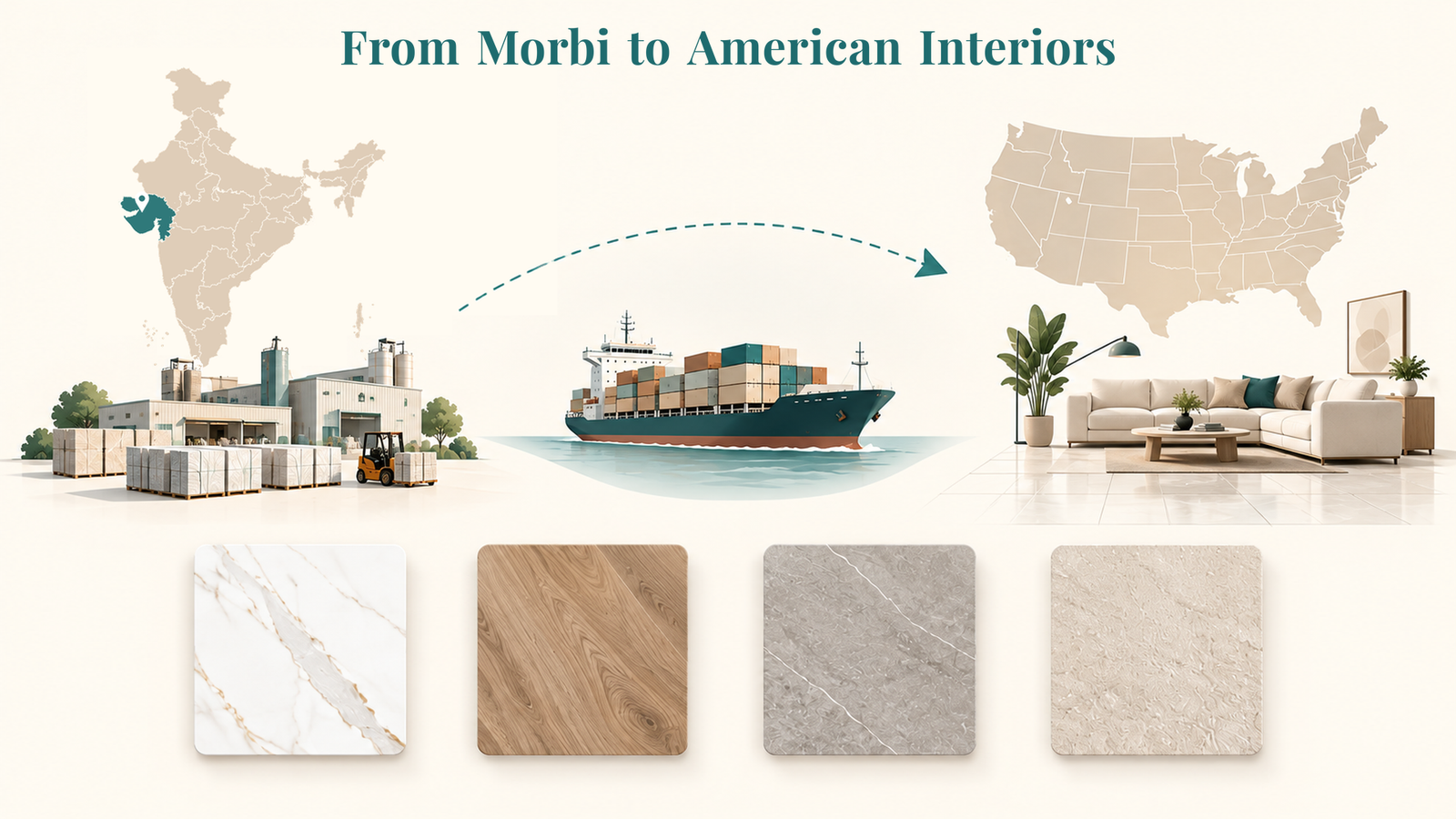
What started 25 years ago in Morbi, India’s ceramic hub, has grown into a trusted global brand. At Flavour Granito, we’ve built our legacy on creating tiles that blend artistry.
Quick Links
Available Sizes
Flavour Granito © . All rights reserved | Design and Managing By Roex Design