Walk into a luxury home built twenty years ago, and you'll probably notice something immediately.
There are a lot of details competing for your attention.
Decorative ceilings. Ornate moldings. Complex flooring patterns. Statement chandeliers. Elaborate wall treatments. Layers upon layers of visual elements designed to communicate one thing:
This home is expensive.
Now walk into many of today's most desirable luxury residences in cities like New York, Los Angeles, Miami, London, or Dubai.
The experience is surprisingly different.
The spaces often feel calmer.
The color palettes are softer.
The materials are fewer.
The rooms feel more open.
And in many cases, the design appears almost effortless.
At first glance, some people even mistake this simplicity for minimalism.
But what they're actually seeing is the evolution of luxury itself.
Because in 2026, the most expensive homes in the world are no longer trying to impress through excess.
They're impressing through restraint.
Historically, luxury design followed a straightforward principle:
The more visible the investment, the more luxurious the space appeared.
Large homes featured:
Luxury was designed to be noticed immediately.
The objective was clear.
A visitor should instantly recognize the value of the space.
For decades, this approach dominated high-end residential architecture around the world.
But over time, something began to change.
Homeowners started asking a different question.
Instead of asking, "How impressive does my home look?"
They began asking:
"How does my home feel to live in every day?"
That question transformed luxury design forever.
Today's luxury homes are increasingly defined by architecture rather than decoration.
Instead of filling spaces with visual noise, designers are focusing on:
The result is a type of luxury that feels quieter but often costs significantly more to achieve.
Why?
Because when decoration disappears, materials become the focal point.
There is nowhere to hide poor quality.
Every surface matters.
Every texture matters.
Every detail matters.
This shift has elevated the importance of premium architectural materials more than ever before.
One of the biggest misconceptions about modern luxury is that simple spaces are easier to create.
In reality, the opposite is often true.
A heavily decorated room can distract from imperfections.
A simple room cannot.
When a home embraces clean architectural lines and uncluttered design, every element becomes highly visible.
The flooring.
The wall finishes.
The textures.
The transitions.
The lighting.
Everything must work together perfectly.
This is one reason why premium surfaces have become such an important part of contemporary luxury interiors.
When there are fewer visual elements, material quality becomes impossible to ignore.
Luxury buyers today are increasingly interested in what designers call "material intelligence."
Rather than investing in decorative excess, homeowners are investing in superior materials.
The focus has shifted toward:
These choices create a sense of refinement that feels timeless rather than trend-driven.
In many modern luxury homes, the flooring itself becomes one of the most important design features in the entire space.
Not because it is loud.
But because it is exceptionally well chosen.
This is where premium vitrified surfaces and large-format porcelain collections are playing a transformative role in contemporary architecture.
Another reason expensive homes are becoming simpler is scale.
Modern luxury homes often feature open layouts and expansive interiors.
In large spaces, excessive detailing can quickly become overwhelming.
Instead, architects are prioritizing visual continuity.
This is why large-format surfaces continue to gain popularity.
Fewer grout lines.
Cleaner sightlines.
Greater spatial flow.
A more seamless experience.
The eye moves naturally through the space without constant interruption.
The result feels elegant, sophisticated, and effortless.
Ironically, the simpler the design appears, the more luxurious the environment often feels.
Many of today's luxury homes are influenced by the world's best hotels, resorts, and wellness retreats.
These spaces rarely rely on excessive decoration.
Instead, they focus on atmosphere.
They use materials strategically.
They create calmness through simplicity.
They allow texture, scale, and natural light to become the primary design elements.
Homeowners increasingly want that same experience.
They want homes that feel restorative rather than overwhelming.
This is one reason stone-inspired surfaces, warm neutral palettes, and architectural porcelain finishes continue to define premium interior projects across the globe.
Luxury buyers tend to think long-term.
They understand that trends change.
What feels exciting today may feel dated tomorrow.
This has created a growing preference for timeless materials that maintain relevance year after year.
Instead of choosing highly fashionable surfaces, many homeowners are selecting finishes inspired by:
These materials have remained desirable for decades because they are connected to architecture rather than fashion.
Their appeal is enduring.
And enduring design is becoming one of the defining characteristics of modern luxury.
Perhaps the biggest reason expensive homes are becoming simpler is confidence.
True luxury no longer feels the need to prove itself.
It doesn't rely on excessive decoration.
It doesn't chase attention.
It doesn't compete for validation.
Instead, it focuses on quality, craftsmanship, and experience.
A beautifully proportioned room with exceptional surfaces often creates a stronger impression than a room filled with expensive but unnecessary details.
This is the direction luxury architecture continues to move toward.
Not more.
Better.
The future of luxury design is not empty minimalism.
Nor is it decorative excess.
It exists somewhere in between.
A space where architecture leads.
Where materials tell the story.
Where textures create depth.
Where surfaces contribute to atmosphere.
Where every design choice feels intentional.
Premium porcelain and vitrified surfaces have become essential to this philosophy because they provide the elegance, durability, and timeless appeal modern homeowners seek.
As brands like Flavour Granito continue developing sophisticated surface collections inspired by nature, architecture, and contemporary living, they are helping define what modern luxury looks like for the next generation of homes.
Expensive homes are starting to look simpler because luxury itself is evolving.
The focus is shifting away from visual excess and toward meaningful design.
Today's most admired residences prioritize material quality, architectural elegance, seamless spaces, and timeless aesthetics over decorative complexity.
They prove that true sophistication doesn't come from adding more.
It comes from choosing better.
And in that new era of luxury, premium surfaces, thoughtful design, and architectural simplicity are becoming the ultimate expressions of modern living.
12-10-2026
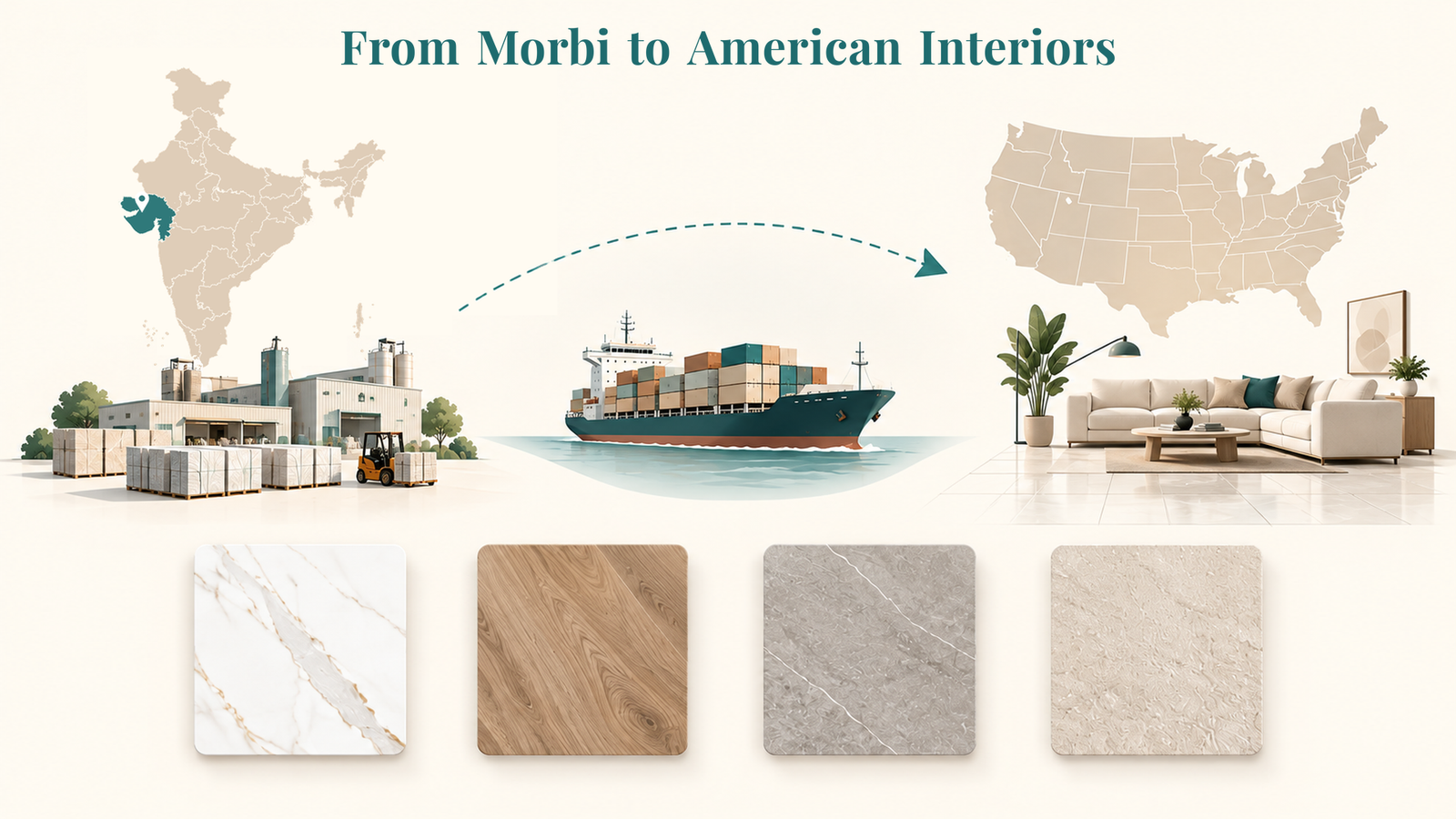
What started 25 years ago in Morbi, India’s ceramic hub, has grown into a trusted global brand. At Flavour Granito, we’ve built our legacy on creating tiles that blend artistry.
Quick Links
Available Sizes
Flavour Granito © . All rights reserved | Design and Managing By Roex Design