For a long time, tile was expected to do one thing well: provide a beautiful, durable surface.
That role is changing.
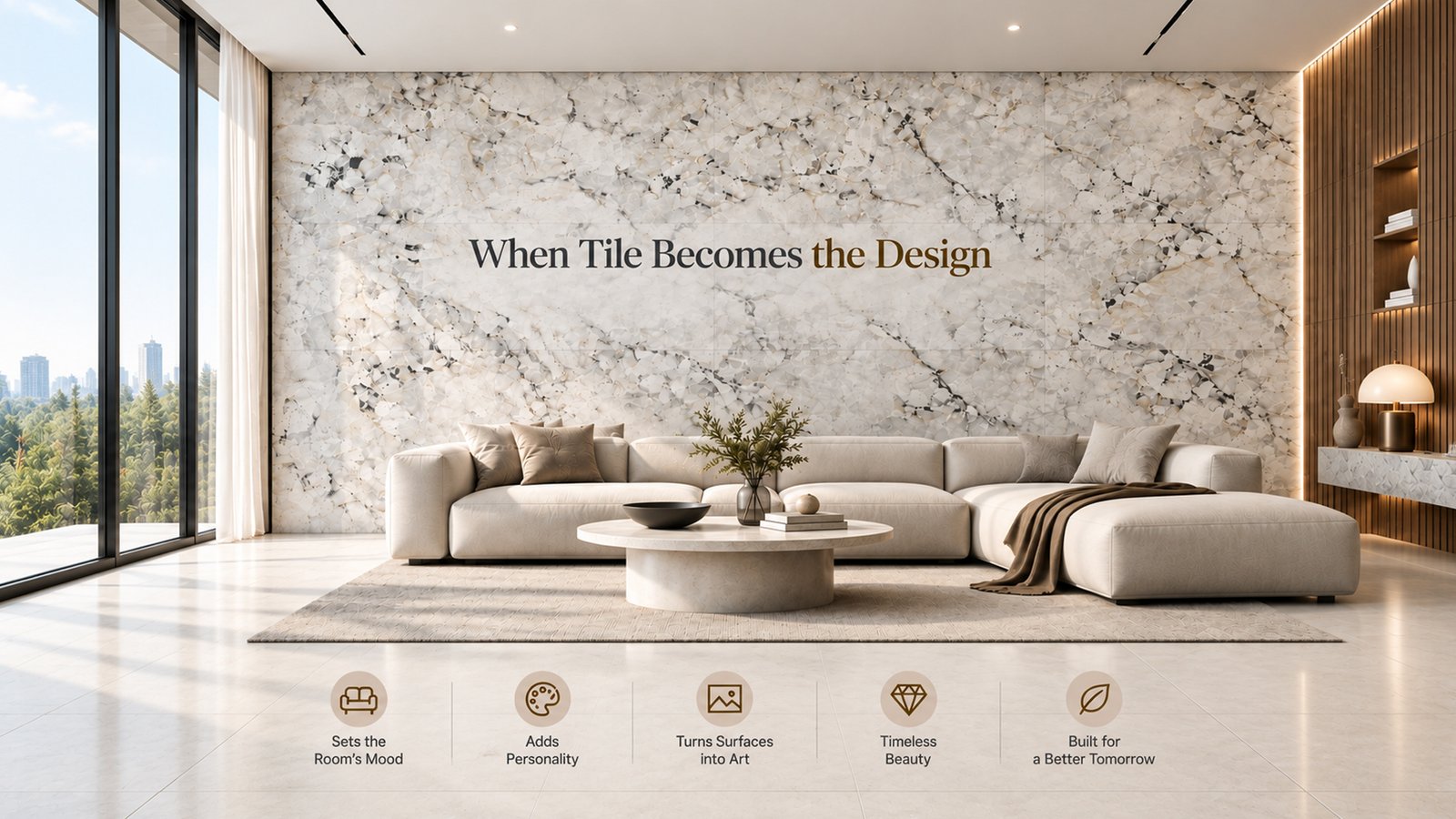
In 2026, designers are increasingly treating tile as part of the visual identity of a space, not simply something placed underneath furniture or behind a kitchen counter. A wall can become the focal point. A floor can establish the mood of an entire room. Texture can create movement without adding color. A large-format porcelain surface can become almost architectural in scale.
Tile is no longer just finishing a room.
It is helping design the room.
The shift is visible across the tile industry. At Coverings 2026, major design directions included “Tile as Art,” tactile surfaces, tailored craft, dimensional textures, and new surface technologies. Together, they point toward a more expressive future for ceramic and porcelain surfaces.
Traditional tile selection often started with a simple question:
What surface will work with everything else?
The question designers are asking more often now is different:
What if the surface is what everything else works around?
That small change can completely transform a space.
A dramatic porcelain wall can become the visual anchor of a living room. A sculpted ceramic backsplash can give a quiet kitchen its defining moment. A stone-inspired floor can introduce movement and depth into an otherwise restrained interior.
The surrounding furniture does not have to compete.
It simply needs to support the surface.
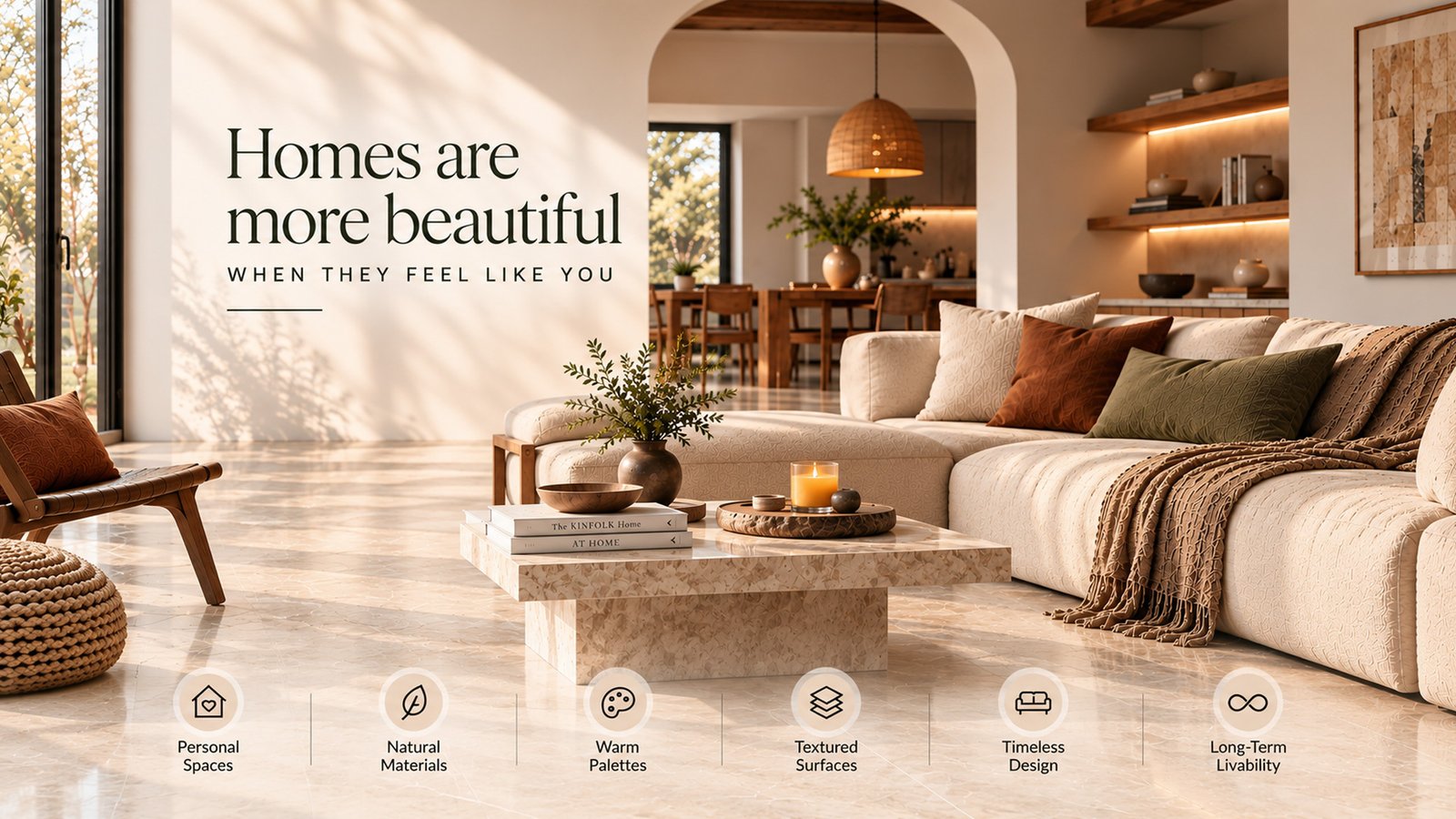
This approach is especially relevant to today's move toward more personal interiors, where homeowners are looking for spaces with visual identity rather than perfectly coordinated finishes.
Color gets attention quickly.
Texture holds attention longer.
One of the clearest tile trends of 2026 is the growing interest in surfaces that create dimension through touch, light, shadow, and relief. Coverings highlighted articulated accents and haptic experiences, while designers showcased ridges, striations, sculptural reliefs, embossed patterns, and undulating surfaces.
The appeal is easy to understand.
A completely flat surface can look beautiful in a photograph. A textured surface changes as you move around the room.
Morning light reveals one detail.
Afternoon light reveals another.
At night, artificial lighting can create an entirely different impression.
Suddenly, the surface has movement without actually moving.
Not every statement surface needs to be dramatic.
In fact, some of the most sophisticated tile designs are remarkably restrained.
A warm ivory tile with delicate variation.
A soft stone-inspired porcelain with barely noticeable veining.
A matte surface with subtle relief.
A wood-inspired tile where the grain provides the visual rhythm.
These surfaces demonstrate an important shift in luxury design: detail does not have to announce itself.
It can be discovered gradually.
This is one reason warm neutrals, natural references, tactile finishes, and nuanced surface patterns are gaining attention across 2026 interiors. Houzz's research on surfaces also points to warm neutrals, quartzite-inspired visuals, textured finishes, and more expressive surface treatments as key directions this year.
Scale is another reason tile is becoming more architectural.
Large-format porcelain reduces visual interruptions and allows stone-inspired patterns, tonal movement, and material effects to read more continuously across a surface.
Instead of seeing individual tiles first, the eye can experience the material as a whole.
This can be particularly effective in:
The result is a cleaner visual field without necessarily becoming minimalist.
That distinction matters.
A large-format surface can be visually calm while still being rich in character.
One of the most interesting developments in tile design is its growing ability to communicate a mood.
A marble-inspired surface can suggest elegance.
A wood-inspired porcelain can create warmth.
A concrete-inspired finish can bring architectural restraint.
A deeply textured ceramic can introduce craftsmanship.
A graphic or artistic tile can become an actual narrative element.
Coverings' 2026 “Tile as Art” trend reflects exactly this evolution, with manufacturers exploring bold graphics, murals, optical effects, and decorative compositions that position tile as an alternative to traditional wall art or wallpaper.
This does not mean every room needs a dramatic feature wall.
It means the surface can now have a point of view.
Another reason these trends feel relevant is the continued desire for materials that feel authentic.
People are drawn to the visual qualities of stone, wood, plaster, linen, concrete, and handcrafted materials because they bring a sense of depth and familiarity into contemporary spaces.
Modern porcelain and vitrified tile can interpret many of these material languages while offering the practical qualities expected from a high-performance surface.
That combination is particularly valuable for American homeowners.
They want the atmosphere of natural materials, but they also want surfaces that can work with the realities of everyday life.
A beautiful kitchen still needs to function as a kitchen.
A sophisticated bathroom still needs a surface that performs in a high-moisture environment.
A busy entryway needs flooring that can handle daily traffic.
Design becomes more meaningful when beauty and performance are considered together.
The best statement tile is not necessarily the most noticeable tile.
It is the one that understands its surroundings.
In a quiet, minimal interior, a richly veined surface can provide movement.
In a traditional home, a refined stone look can reinforce architectural character.
In a contemporary kitchen, texture can soften an otherwise linear environment.
In a large open-plan space, flooring can quietly connect separate areas.
This is where thoughtful tile selection becomes more important than simply following a trend.
The same surface can feel completely different depending on scale, lighting, grout, surrounding materials, and architectural context.
Good design does not ask a tile to stand alone.
It gives the tile a reason to be there.
The growing role of tile as a design element gives homeowners more freedom.
Instead of treating flooring and walls as fixed backgrounds, they can use surfaces to establish the personality of a space from the beginning.
A neutral room can gain depth through texture.
A simple kitchen can gain identity through its backsplash.
A large bathroom can feel more architectural through continuous porcelain surfaces.
A contemporary living area can become warmer through wood-inspired flooring.
And a restrained palette can become visually interesting simply by introducing variation in material.
This is perhaps the most exciting part of the current tile movement.
You do not always need more decoration. Sometimes you simply need a more interesting surface.
At Flavour Granito, the evolution of tile toward more expressive surfaces aligns naturally with the way contemporary interiors are being designed.
Our range of vitrified, porcelain, GVT, PGVT, and ceramic tiles brings together different visual languages, from natural and wood-inspired surfaces to matte, glossy, carving, and other finishes.
Available in contemporary formats including large sizes, these surfaces can become more than functional flooring or wall covering.
They can establish continuity.
Create contrast.
Frame architecture.
Or simply give a room the visual depth it was missing.
The objective is not to make every surface a statement.
It is to give designers and homeowners the freedom to decide where the statement belongs.
The most interesting thing happening in tile right now is not simply a new color or format.
It is a change in perception.
Tile is becoming more tactile.
More expressive.
More architectural.
More personal.
And increasingly, it is being treated with the same creative consideration once reserved for furniture, lighting, artwork, and decorative materials. Industry trends from 2026 show that technology is helping manufacturers push this further, creating surfaces with greater dimensionality, realism, texture, and performance.
The result is a new generation of interiors where surfaces are not asked to disappear.
They are allowed to contribute.
Because sometimes the most memorable part of a room is not what you put inside it.
It is what you put across its surfaces.
31-08-2026
What started 25 years ago in Morbi, India’s ceramic hub, has grown into a trusted global brand. At Flavour Granito, we’ve built our legacy on creating tiles that blend artistry.
Quick Links
Available Sizes
Flavour Granito © . All rights reserved | Design and Managing By Roex Design